GUTSCHEIN
Bitte haben Sie einen Moment Geduld, wir legen Ihr Produkt in den Warenkorb.
Diese Produkte könnten Sie auch interessieren:
Bitte haben Sie einen Moment Geduld, wir legen Ihr Produkt in den Warenkorb.
| Themen | Philosophie und Religion Philosophie Philosophische Traditionen und Denkschulen Antike griechische und römische Philosophie |
|---|---|
| ISBN | 9780199281701 |
| Sprache | Englisch |
| Erscheinungsdatum | 15.02.2007 |
| Größe | 240 x 161 mm |
| Verlag | OUP Oxford |
| Lieferzeit | Lieferung in 7-14 Werktagen |
| Herstellerangaben | Anzeigen Libri GmbH Europaallee 1 | D-36244 Bad Hersfeld gpsr@libri.de |
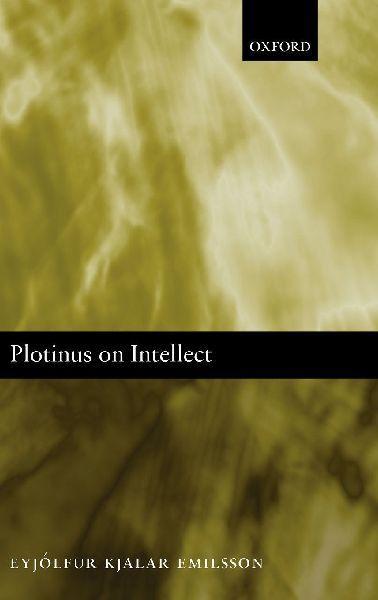
Plotinus (205-269 AD) is considered the founder of Neoplatonism, the dominant philosophical movement of late antiquity, and a rich seam of current scholarly interest. Whilst Plotinus' influence on the subsequent philosophical tradition was enormous, his ideas can also be seen as the culmination of some implicit trends in the Greek tradition from Parmenides, Plato, Aristotle, and the Stoics. Emilsson's in-depth study focuses on Plotinus' notion of Intellect, which comes second in his hierarchical model of reality, after the One, unknowable first cause of everything. As opposed to ordinary human discursive thinking, Intellect's thought is all-at-once, timeless, truthful and a direct intuition into 'things themselves'; it is presumably not even propositional. Emilsson discusses and explains this strong notion of non-discursive thought and explores Plotinus' insistence that this must be the primary form of thought.Plotinus' doctrine of Intellect raises a host of questions that Emilsson addresses. First, Intellect's thought is described as an attempt to grasp the One and at the same time as self-thought. How are these two claims related? How are they compatible? What lies in Plotinus' insistence that Intellect's thought is a thought of itself? Second, Plotinus gives two minimum requirements of thought: that it must involve a distinction between thinker and object of thought, and that the object itself must be varied. How are these two pluralist claims related? Third, what is the relation between Intellect as a thinker and Intellect as an object of thought? Plotinus' position here seems to amount to a form of idealism, and this is explored.
| Themen | Philosophie und Religion Philosophie Philosophische Traditionen und Denkschulen Antike griechische und römische Philosophie |
|---|---|
| ISBN | 9780199281701 |
| Sprache | Englisch |
| Erscheinungsdatum | 15.02.2007 |
| Größe | 240 x 161 mm |
| Verlag | OUP Oxford |
| Lieferzeit | Lieferung in 7-14 Werktagen |
| Herstellerangaben | Anzeigen Libri GmbH Europaallee 1 | D-36244 Bad Hersfeld gpsr@libri.de |
Wie gefällt Ihnen unser Shop?