GUTSCHEIN
Bitte haben Sie einen Moment Geduld, wir legen Ihr Produkt in den Warenkorb.
Diese Produkte könnten Sie auch interessieren:
Bitte haben Sie einen Moment Geduld, wir legen Ihr Produkt in den Warenkorb.
| Themen | Gesellschaft und Sozialwissenschaften Psychologie Kognitive Psychologie |
|---|---|
| ISBN | 9780199357789 |
| Sprache | Englisch |
| Erscheinungsdatum | 03.04.2017 |
| Größe | 260 x 183 mm |
| Verlag | OXFORD UNIV PR |
| Lieferzeit | Lieferung in 7-14 Werktagen |
| Herstellerangaben | Anzeigen Libri GmbH Europaallee 1 | D-36244 Bad Hersfeld gpsr@libri.de |
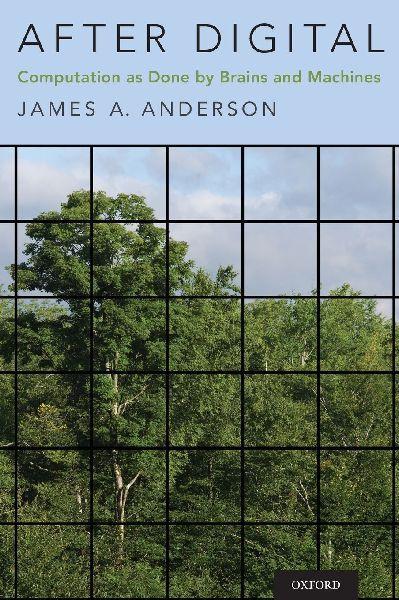
Current computer technology doubles in in power roughly every two years, an increase called "Moore's Law." This constant increase is predicted to come to an end soon. Digital technology will change. Although digital computers dominate today's world, there are alternative ways to "compute" which might be better and more efficient than digital computation. After Digital looks at where the field of computation began and where it might be headed, and offers predictions about a collaborative future relationship between human cognition and mechanical computation. James A. Anderson, a pioneer of biologically inspired neural nets, presents two different kinds of computation-digital and analog--and gives examples of their history, function, and limitations. A third, the brain, falls somewhere in between these two forms, and is suggested as a computer architecture that is more capable of performing some specific important cognitive tasks-perception, reasoning, and intuition, for example- than a digital computer, even though the digital computer is constructed from far faster and more reliable basic elements. Anderson discusses the essentials of brain hardware, in particular, the cerebral cortex, and how cortical structure can influence the form taken by the computational operations underlying cognition. Topics include association, understanding complex systems through analogy, formation of abstractions, the biology of number and its use in arithmetic and mathematics, and computing across scales of organization. These applications, of great human interest, also form the goals of genuine artificial intelligence. After Digital will appeal to a broad cognitive science community, including computer scientists, philosophers, psychologists, and neuroscientists, as well as the curious science layreader, and will help to understand and shape future developments in computation.
| Themen | Gesellschaft und Sozialwissenschaften Psychologie Kognitive Psychologie |
|---|---|
| ISBN | 9780199357789 |
| Sprache | Englisch |
| Erscheinungsdatum | 03.04.2017 |
| Größe | 260 x 183 mm |
| Verlag | OXFORD UNIV PR |
| Lieferzeit | Lieferung in 7-14 Werktagen |
| Herstellerangaben | Anzeigen Libri GmbH Europaallee 1 | D-36244 Bad Hersfeld gpsr@libri.de |
 FALTER-Rezension
 Emily Walton in FALTER 17/2018 vom 25.04.2018 (S. 20)
Die Verdoppelung der Rechenleistung alle zwei Jahre (auch als „Moores Gesetz“ bekannt) wird laut James Anderson bald ein Ende finden. Künftig werden Fragen im Vordergrund stehen, wie Computersysteme aufgebaut und wie „intelligent“ sie sind. Der Professor an der Brown University liefert einen fundierten Überblick über zwei Arten des Berechnens: analog und digital. Das menschliche Gehirn liegt für ihn als dritte Art in der Mitte dieser beiden und könnte künftig mit seinem Aufbau als Vorbild für die Architektur von Computersystemen dienen.
Wie gefällt Ihnen unser Shop?