GUTSCHEIN
Bitte haben Sie einen Moment Geduld, wir legen Ihr Produkt in den Warenkorb.
Diese Produkte könnten Sie auch interessieren:
Bitte haben Sie einen Moment Geduld, wir legen Ihr Produkt in den Warenkorb.
| Themen | Kunst Architektur Geschichte der Architektur |
|---|---|
| ISBN | 9780262035736 |
| Sprache | Englisch |
| Erscheinungsdatum | 07.04.2017 |
| Größe | 234 x 187 mm |
| Verlag | MIT Press |
| Lieferzeit | Lieferung innerhalb von 28 Werktagen |
| Herstellerangaben | Anzeigen gpsr.requests@easproject.com |
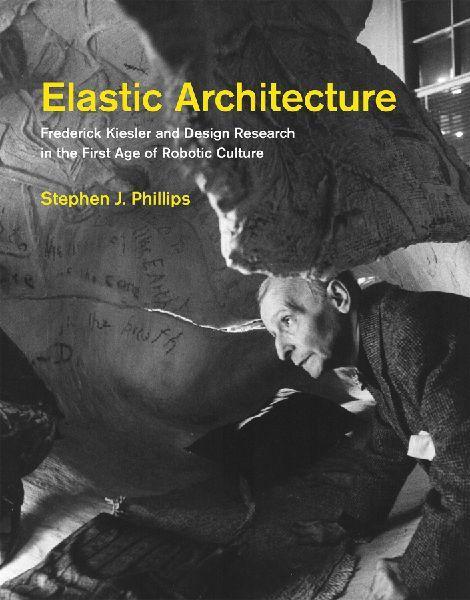
Twentieth-century architect Frederick Kiesler's innovative multidisciplinary practice responded to the ever-changing needs of the body in motion, anticipating the research-oriented practices of contemporary art and architecture.In 1960, the renowned architect Philip Johnson championed Frederick Kiesler, calling him “the greatest non-building architect of our time.” Kiesler's ideas were difficult to construct, but as Johnson believed, “enormous” and “profound.” Kiesler (1890–1965) went against the grain of the accepted modern style, rejecting rectilinear glass and steel in favor of more organic forms and flexible structures that could respond to the ever-changing needs of the body in motion. In Elastic Architecture, Stephen Phillips offers the first in-depth exploration of Kiesler's innovative and multidisciplinary research and design practice. Phillips argues that Kiesler established a new career trajectory for architects not as master builders, but as research practitioners whose innovative means and methods could advance alternative and speculative architecture. Indeed, Kiesler's own career was the ultimate uncompromising model of a research-based practice.Exploring Kiesler's formative relationships with the European avant-garde, Phillips shows how Kiesler found inspiration in the plastic arts, experimental theater, early animation, and automatons to develop and refine his spatial concept of the Endless. Moving from Europe to New York in the 1920s, Kiesler applied these radical Dadaist, constructivist, and surrealist practices to his urban display projects, which included shop windows for Saks Fifth Avenue. After launching his innovative Design Correlation Laboratory at Columbia and Yale, Kiesler went on to invent new houses, theaters, and galleries that were meant to move, shift, and adapt to evolutionary changes occurring within the natural and built environment. As Phillips demonstrates vividly, although many of Kiesler's designs remained unbuilt, his ideas proved influential to later generations of architects and speculative artists internationally, including Archigram, Greg Lynn, UNStudio, and Olafur Eliasson.
| Themen | Kunst Architektur Geschichte der Architektur |
|---|---|
| ISBN | 9780262035736 |
| Sprache | Englisch |
| Erscheinungsdatum | 07.04.2017 |
| Größe | 234 x 187 mm |
| Verlag | MIT Press |
| Lieferzeit | Lieferung innerhalb von 28 Werktagen |
| Herstellerangaben | Anzeigen gpsr.requests@easproject.com |
Wie gefällt Ihnen unser Shop?