GUTSCHEIN
Bitte haben Sie einen Moment Geduld, wir legen Ihr Produkt in den Warenkorb.
Diese Produkte könnten Sie auch interessieren:
Bitte haben Sie einen Moment Geduld, wir legen Ihr Produkt in den Warenkorb.
| Reihe | Basic Bioethics |
|---|---|
| Themen | Medizin Medizin / Gesundheitswesen, allgemein Medizinische Berufe Medizinethik, Standesregeln |
| ISBN | 9780262513272 |
| Sprache | Englisch |
| Erscheinungsdatum | 01.08.2009 |
| Größe | 226 x 150 mm |
| Verlag | Penguin Random House LLC |
| Empf. Lesealter | ab 18 Jahre |
| Lieferzeit | Lieferung innerhalb von 28 Werktagen |
| Herstellerangaben | Anzeigen Libri GmbH Europaallee 1 | D-36244 Bad Hersfeld gpsr@libri.de |
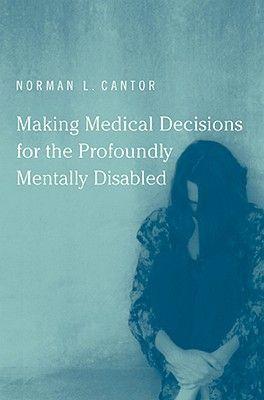
A legal and moral analysis of medical decision making on behalf of those with such severe cognitive impairments that they cannot exercise self-determination.In this book, Norman Cantor analyzes the legal and moral status of people with profound mental disabilities--those with extreme cognitive impairments that prevent their exercise of medical self-determination. He proposes a legal and moral framework for surrogate medical decision making on their behalf. The issues Cantor explores will be of interest to professionals in law, medicine, psychology, philosophy, and ethics, as well as to parents, guardians, and health care providers who face perplexing issues in the context of surrogate medical decision making.The profoundly mentally disabled are thought by some moral philosophers to lack the minimum cognitive ability for personhood. Countering this position, Cantor advances both theoretical and practical arguments for according them full legal and moral status. He also argues that the concept of intrinsic human dignity should have an integral role in shaping the bounds of surrogate decision making. Thus, he claims, while profoundly mentally disabled persons are not entitled to make their own medical decisions, respect for intrinsic human dignity dictates their right to have a conscientious surrogate make medical decisions on their behalf. Cantor discusses the criteria that bind such surrogates. He asserts, contrary to popular wisdom, that the best interests of the disabled person are not always the determinative standard: the interests of family or others can sometimes be considered. Surrogates may even, consistent with the intrinsic human dignity standard, sometimes authorize tissue donation or participation in nontherapeutic medical research by profoundly disabled persons. Intrinsic human dignity limits the occasions for such decisions and dictates close attention to the preferences and feelings of the profoundly disabled persons themselves. Cantor also analyzes the underlying philosophical rationale that makes these decision-making criteria consistent with law and morals.
| Reihe | Basic Bioethics |
|---|---|
| Themen | Medizin Medizin / Gesundheitswesen, allgemein Medizinische Berufe Medizinethik, Standesregeln |
| ISBN | 9780262513272 |
| Sprache | Englisch |
| Erscheinungsdatum | 01.08.2009 |
| Größe | 226 x 150 mm |
| Verlag | Penguin Random House LLC |
| Empf. Lesealter | ab 18 Jahre |
| Lieferzeit | Lieferung innerhalb von 28 Werktagen |
| Herstellerangaben | Anzeigen Libri GmbH Europaallee 1 | D-36244 Bad Hersfeld gpsr@libri.de |
Wie gefällt Ihnen unser Shop?