GUTSCHEIN
Bitte haben Sie einen Moment Geduld, wir legen Ihr Produkt in den Warenkorb.
Diese Produkte könnten Sie auch interessieren:
Bitte haben Sie einen Moment Geduld, wir legen Ihr Produkt in den Warenkorb.
| Reihe | Belfer Center Studies in Inter |
|---|---|
| Themen | Geschichte und Archäologie Geschichte |
| ISBN | 9780262581615 |
| Sprache | Englisch |
| Erscheinungsdatum | 01.07.1998 |
| Größe | 234 x 155 mm |
| Verlag | Penguin Random House LLC |
| Empf. Lesealter | ab 18 Jahre |
| Lieferzeit | Lieferung innerhalb von 28 Werktagen |
| Herstellerangaben | Anzeigen Libri GmbH Europaallee 1 | D-36244 Bad Hersfeld gpsr@libri.de |
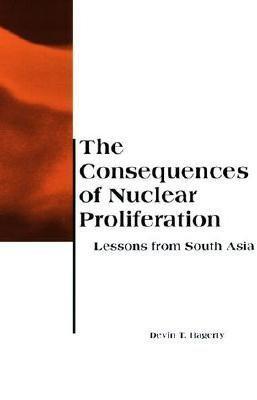
Analysts of international politics have debated heatedly over the likely consequences of the spread of nuclear weapons. Most argue that nuclear proliferation will destabilize the world and increase the risk of nuclear war. Others counter that the threat of nuclear war is enough to convince new nuclear nations to adopt prudent security policies.In this book, Devin Hagerty examines the relationship between two emerging nuclear powers--India and Pakistan--to assess how nuclear weapons have changed their foreign and military policies. Even before India and Pakistan tested nuclear weapons in 1998, both countries believed that the other was capable of assembling a bomb. In recent years, their respective governments had conducted diplomacy in the shadow of those nuclear suspicions. India and Pakistan have fought three wars since becoming independent in 1947 and their relations remain tense, especially over the disputed border region of Kashmir.Hagerty presents detailed studies of the January 1987 Indo-Pakistani crisis, precipitated by India's Brasstacks military exercises, and the 1990 confrontation over Kashmir. He finds that the two countries nearly went to war in the Brasstacks crisis, at least partly because Pakistan's nuclear capability remained nascent. In the 1990 crisis, however, both countries were aware of the possibility of nuclear escalation and acted more cautiously. Hagerty finds little evidence of preparations for preemptive nuclear strikes in the 1990 crisis. Instead, India and Pakistan appear to have embraced the logic of nuclear deterrence. Hagerty concludes that relations between India and Pakistan in recent years support the argument that nuclear proliferation does not necessarily destabilize international relations and may even reduce the risk of war. This conclusion is grounds for optimism about peace in South Asia now that India and Pakistan are overt nuclear-weapons states.
| Reihe | Belfer Center Studies in Inter |
|---|---|
| Themen | Geschichte und Archäologie Geschichte |
| ISBN | 9780262581615 |
| Sprache | Englisch |
| Erscheinungsdatum | 01.07.1998 |
| Größe | 234 x 155 mm |
| Verlag | Penguin Random House LLC |
| Empf. Lesealter | ab 18 Jahre |
| Lieferzeit | Lieferung innerhalb von 28 Werktagen |
| Herstellerangaben | Anzeigen Libri GmbH Europaallee 1 | D-36244 Bad Hersfeld gpsr@libri.de |
Wie gefällt Ihnen unser Shop?