GUTSCHEIN
Bitte haben Sie einen Moment Geduld, wir legen Ihr Produkt in den Warenkorb.
Diese Produkte könnten Sie auch interessieren:
Bitte haben Sie einen Moment Geduld, wir legen Ihr Produkt in den Warenkorb.
| Themen | Biographie, Literatur und Literaturwissenschaft Geschichte und Kritik Literaturwissenschaft, allgemein Antike, Klassik, Mittelalter |
|---|---|
| ISBN | 9780268023515 |
| Sprache | Englisch |
| Erscheinungsdatum | 25.04.2001 |
| Größe | 235 x 157 mm |
| Verlag | University of Notre Dame Press |
| Lieferzeit | Lieferung in 7-14 Werktagen |
| Herstellerangaben | Anzeigen gpsr.requests@easproject.com |
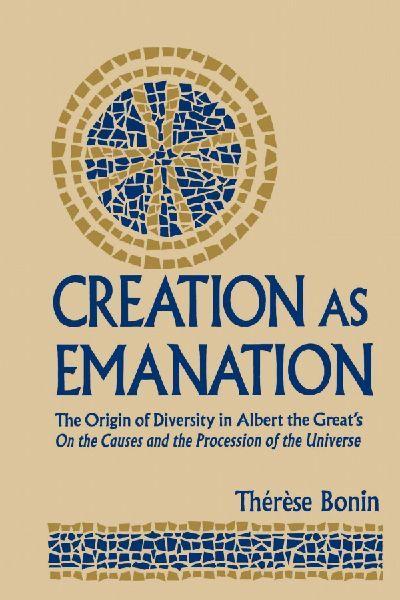
The Liber de causis (De causis et processu universitatis a prima causa), a monotheistic reworking of Proclus' Elements of Theology, was translated from Arabic into Latin in the twelfth century, with an attribution to Aristotle. Considering this Neoplatonic text a product of Aristotle's school and even the completion of Aristotle's Metaphysics, Albert the Great concluded his series of Aristotelian paraphrases by commenting on it.To do so was to invite controversy, since accidents of translation had made many readers think that the Liber de causis taught that God made only the first creature, which in turn created the diverse multitude of lesser things. Thus, Albert's contemporaries in the Christian West took the text to uphold the supposedly Aristotelian doctrine that from the One only one thing can emanate-a doctrine they rejected, believing as they did that God freely determined the number and kinds of creatures. Albert, however, defended the philosophers against the theologians of his day, denying that the thesis "from the One only one proceeds" removed God's causality from the diversity and multiplicity of our world. This Albert did by appealing to a greater theologian, Pseudo-Dionysius the Areopagite, and equating the being that is the subject of metaphysics with the procession of Being from God's intellect, a procession Dionysius described in On the Divine Names.Creation as Emanation examines Albert's reading of the Liber de causis with an eye toward two questions: First, how does Albert view the relation between faith and reason, so that he can identify creation from nothing with emanation from God? And second, how does he understand Platonism and Aristotelianism, so that he can avoid the misreadings of his fellow theologians by finding in a late-fifth-century Neoplatonist the key to Aristotle's meaning?
| Themen | Biographie, Literatur und Literaturwissenschaft Geschichte und Kritik Literaturwissenschaft, allgemein Antike, Klassik, Mittelalter |
|---|---|
| ISBN | 9780268023515 |
| Sprache | Englisch |
| Erscheinungsdatum | 25.04.2001 |
| Größe | 235 x 157 mm |
| Verlag | University of Notre Dame Press |
| Lieferzeit | Lieferung in 7-14 Werktagen |
| Herstellerangaben | Anzeigen gpsr.requests@easproject.com |
Wie gefällt Ihnen unser Shop?