GUTSCHEIN
Bitte haben Sie einen Moment Geduld, wir legen Ihr Produkt in den Warenkorb.
Diese Produkte könnten Sie auch interessieren:
Bitte haben Sie einen Moment Geduld, wir legen Ihr Produkt in den Warenkorb.
| Themen | Technologie, Ingenieurswissenschaft, Landwirtschaft, Industrieprozesse Maschinenbau und Werkstoffe Materialwissenschaft Werkstoffprüfung |
|---|---|
| ISBN | 9780306464430 |
| Sprache | Englisch |
| Erscheinungsdatum | 31.10.2000 |
| Größe | 264 x 183 mm |
| Verlag | Springer Us |
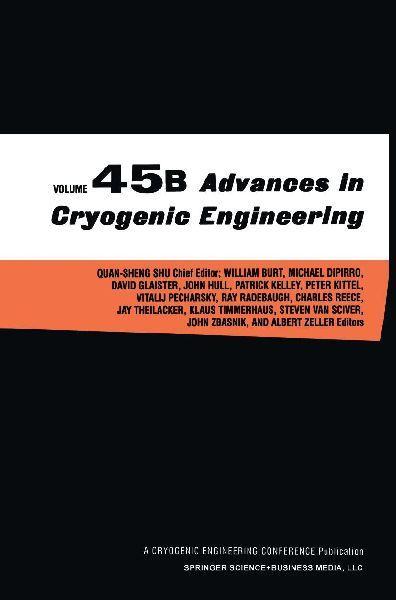
| Herausgegeben von | Klaus D Timmerhaus, John Hull, Al Zeller, Vitalij Pecharsky, David Glaister, Quan-Sheng Shu, Jay Theilacker, Steven W van Sciver, Charles Reece, Michael Dipirro, John Zbasnik, Ray Radebaugh, Bill Burt, J Patrick Kelley, Peter Kittel |
| Lieferzeit | Lieferung innerhalb von 28 Werktagen |
| Herstellerangaben | Anzeigen ProductSafety@springernature.com |
In recent years, the technology of cryogenic comminution has been widely applied in the field of chemical engineering, food making, medicine production, and particularly in recycling of waste materials. Because of the increasing pollution of waste tires and the shortage of raw rubber resource, the recycling process for waste rubber products has become important and commercially viable. This technology has shown a great number of advantages such as causing no environmental pollution, requiring low energy consumption and producing high quality products. Hence, the normal crusher which was used to reclaim materials, such as waste tires, nylon, plastic and many polymer materials at atmospheric 12 temperature is being replaced by a cryogenic crusher. ¿ In the cryogenic crusher, the property of the milled material is usually very sensitive to temperature change. When a crusher is in operation, it will generate a great deal of heat that causes the material temperature increased. Once the temperature increases over the vitrification temperature, the material property will change and lose the brittle behavior causing the energy consumption to rise sharply. Consequently, the comminution process cannot be continued. Therefore, it is believed that the cryogenic crusher is the most critical component in the cryogenic comminution system. The research on the temperature increase and energy consumption in the cryogenic crusher is not only to reduce the energy consumption of the crasher, but also to reduce the energy consumption of the cryogenic system.
| Themen | Technologie, Ingenieurswissenschaft, Landwirtschaft, Industrieprozesse Maschinenbau und Werkstoffe Materialwissenschaft Werkstoffprüfung |
|---|---|
| ISBN | 9780306464430 |
| Sprache | Englisch |
| Erscheinungsdatum | 31.10.2000 |
| Größe | 264 x 183 mm |
| Verlag | Springer Us |
| Herausgegeben von | Klaus D Timmerhaus, John Hull, Al Zeller, Vitalij Pecharsky, David Glaister, Quan-Sheng Shu, Jay Theilacker, Steven W van Sciver, Charles Reece, Michael Dipirro, John Zbasnik, Ray Radebaugh, Bill Burt, J Patrick Kelley, Peter Kittel |
| Lieferzeit | Lieferung innerhalb von 28 Werktagen |
| Herstellerangaben | Anzeigen ProductSafety@springernature.com |
Wie gefällt Ihnen unser Shop?