GUTSCHEIN
Bitte haben Sie einen Moment Geduld, wir legen Ihr Produkt in den Warenkorb.
Diese Produkte könnten Sie auch interessieren:
Bitte haben Sie einen Moment Geduld, wir legen Ihr Produkt in den Warenkorb.
| Themen | Geschichte und Archäologie Geschichte Geschichte des Nahen und Mittleren Ostens |
|---|---|
| ISBN | 9780691210636 |
| Sprache | Englisch |
| Erscheinungsdatum | 18.11.2025 |
| Größe | 238 x 163 mm |
| Verlag | Princeton University Press |
| Lieferzeit | Lieferung innerhalb von 28 Werktagen |
| Herstellerangaben | Anzeigen Libri GmbH Europaallee 1 | D-36244 Bad Hersfeld gpsr@libri.de |
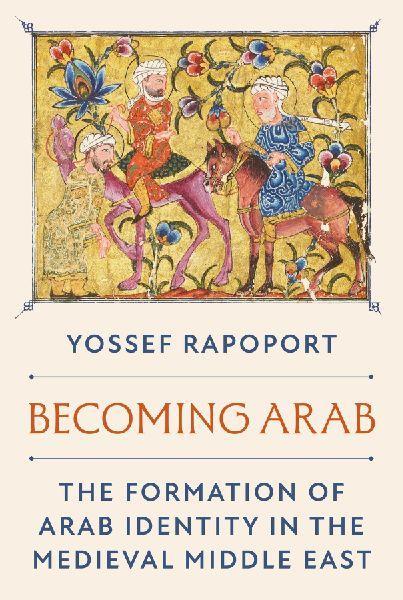
How late medieval Middle Eastern peasants adopted Arab cultural identities and formed village clansDuring the later Middle Ages, peasants in Egypt and Greater Syria came to view themselves as members of Arab clans that had originated in the Arabian Peninsula. They expressed their Arab identity by wearing Arab headgear, adopting an Arab dialect, and circulating a new genre of popular epic that told heroic tales of pre-Islamic Arabia. In Becoming Arab, Yossef Rapoport argues that this proliferation of Arab village clans did not come about through mass migration and displacement but reflected an internal transformation. Drawing on extensive documentary, literary, administrative, and material evidence, Rapoport shows that the widespread formation of Arab village clans in late medieval Egypt and Greater Syria was a gradual process, the result of mass rural conversion to Islam and a new landholding regime in which peasants shifted from being landowners to being tenants. After the eleventh century, Rapoport contends, Middle Eastern villagers were turning Arab.These Arab village clans were not merely administrative regimes imposed from above; villagers enthusiastically embraced their new identities. New converts to Islam adopted Arab lineages to claim status and as a counter-identity to urban-based Turkish elites. Arab identity was used by clans to mobilize rural uprisings against the ruling sultans and to resolve disputes among villagers. Challenging traditional historiography of the Middle East, which views Arab clansmen as pastoralists whose identity separated them from that of the wider peasantry, Rapoport argues that the pervasive establishment of Arab village clans was the most important development in the history of the Middle Eastern countryside in the Islamic era.
| Themen | Geschichte und Archäologie Geschichte Geschichte des Nahen und Mittleren Ostens |
|---|---|
| ISBN | 9780691210636 |
| Sprache | Englisch |
| Erscheinungsdatum | 18.11.2025 |
| Größe | 238 x 163 mm |
| Verlag | Princeton University Press |
| Lieferzeit | Lieferung innerhalb von 28 Werktagen |
| Herstellerangaben | Anzeigen Libri GmbH Europaallee 1 | D-36244 Bad Hersfeld gpsr@libri.de |
Wie gefällt Ihnen unser Shop?