GUTSCHEIN
Bitte haben Sie einen Moment Geduld, wir legen Ihr Produkt in den Warenkorb.
Diese Produkte könnten Sie auch interessieren:
Bitte haben Sie einen Moment Geduld, wir legen Ihr Produkt in den Warenkorb.
| Themen | Philosophie und Religion Philosophie Philosophische Traditionen und Denkschulen Nach 1800 |
|---|---|
| ISBN | 9780791455463 |
| Sprache | Englisch |
| Erscheinungsdatum | 10.10.2002 |
| Größe | 229 x 152 mm |
| Verlag | SUNY Press |
| Lieferzeit | Lieferung in 7-14 Werktagen |
| Herstellerangaben | Anzeigen Libri GmbH Europaallee 1 | D-36244 Bad Hersfeld gpsr@libri.de |
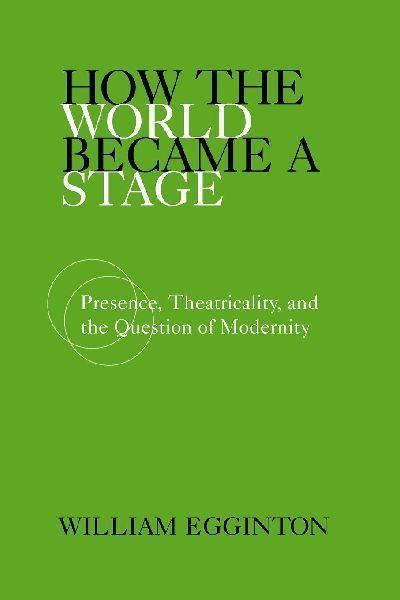
Argues that the experience of modernity is fundamentally spatial rather than subjective.What is special, distinct, modern about modernity? In How the World Became a Stage, William Egginton argues that the experience of modernity is fundamentally spatial rather than subjective and proposes replacing the vocabulary of subjectivity with the concepts of presence and theatricality. Following a Heideggerian injunctive to search for the roots of epochal change not in philosophies so much as in basic skills and practices, he describes the spatiality of modernity on the basis of a close historical analysis of the practices of spectacle from the late Middle Ages to the early modern period, paying particular attention to stage practices in France and Spain. He recounts how the space in which the world is disclosed changed from the full, magically charged space of presence to the empty, fungible, and theatrical space of the stage.
| Themen | Philosophie und Religion Philosophie Philosophische Traditionen und Denkschulen Nach 1800 |
|---|---|
| ISBN | 9780791455463 |
| Sprache | Englisch |
| Erscheinungsdatum | 10.10.2002 |
| Größe | 229 x 152 mm |
| Verlag | SUNY Press |
| Lieferzeit | Lieferung in 7-14 Werktagen |
| Herstellerangaben | Anzeigen Libri GmbH Europaallee 1 | D-36244 Bad Hersfeld gpsr@libri.de |
Wie gefällt Ihnen unser Shop?