GUTSCHEIN
Bitte haben Sie einen Moment Geduld, wir legen Ihr Produkt in den Warenkorb.
Diese Produkte könnten Sie auch interessieren:
Bitte haben Sie einen Moment Geduld, wir legen Ihr Produkt in den Warenkorb.
| Themen | Biographie, Literatur und Literaturwissenschaft Geschichte und Kritik Literaturwissenschaft, allgemein |
|---|---|
| ISBN | 9780812247510 |
| Sprache | Englisch |
| Erscheinungsdatum | 29.10.2015 |
| Größe | 231 x 155 mm |
| Verlag | University of Pennsylvania Press |
| Lieferzeit | Lieferung innerhalb von 28 Werktagen |
| Herstellerangaben | Anzeigen Libri GmbH Europaallee 1 | D-36244 Bad Hersfeld gpsr@libri.de |
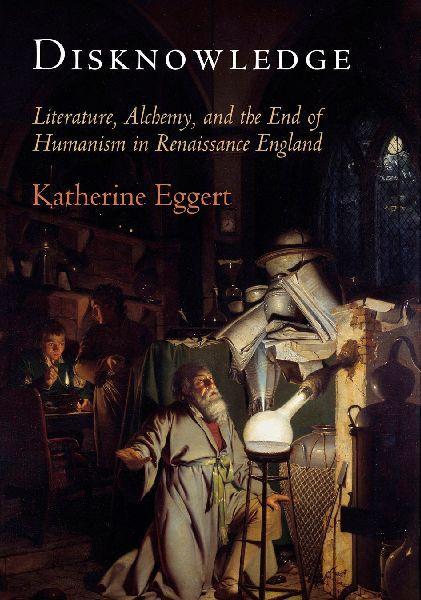
"Disknowledge": knowing something isn't true, but believing it anyway. In Disknowledge: Literature, Alchemy, and the End of Humanism in Renaissance England, Katherine Eggert explores the crumbling state of learning in the sixteenth and seventeenth centuries. Even as the shortcomings of Renaissance humanism became plain to see, many intellectuals of the age had little choice but to treat their familiar knowledge systems as though they still held. Humanism thus came to share the status of alchemy: a way of thinking simultaneously productive and suspect, reasonable and wrongheaded. Eggert argues that English writers used alchemy to signal how to avoid or camouflage pressing but discomfiting topics in an age of rapid intellectual change. Disknowledge describes how John Donne, George Herbert, Henry Vaughan, John Dee, Christopher Marlowe, William Harvey, Helkiah Crooke, Edmund Spenser, and William Shakespeare used alchemical imagery, rhetoric, and habits of thought to shunt aside three difficult questions: how theories of matter shared their physics with Roman Catholic transubstantiation; how Christian Hermeticism depended on Jewish Kabbalah; and how new anatomical learning acknowledged women's role in human reproduction. Disknowledge further shows how Shakespeare, Ben Jonson, and Margaret Cavendish used the language of alchemy to castigate humanism for its blind spots and to invent a new, posthumanist mode of knowledge: writing fiction. Covering a wide range of authors and topics, Disknowledge is the first book to analyze how English Renaissance literature employed alchemy to probe the nature and limits of learning. The concept of disknowledge-willfully adhering to something we know is wrong-resonates across literary and cultural studies as an urgent issue of our own era.
| Themen | Biographie, Literatur und Literaturwissenschaft Geschichte und Kritik Literaturwissenschaft, allgemein |
|---|---|
| ISBN | 9780812247510 |
| Sprache | Englisch |
| Erscheinungsdatum | 29.10.2015 |
| Größe | 231 x 155 mm |
| Verlag | University of Pennsylvania Press |
| Lieferzeit | Lieferung innerhalb von 28 Werktagen |
| Herstellerangaben | Anzeigen Libri GmbH Europaallee 1 | D-36244 Bad Hersfeld gpsr@libri.de |
Wie gefällt Ihnen unser Shop?