GUTSCHEIN
Bitte haben Sie einen Moment Geduld, wir legen Ihr Produkt in den Warenkorb.
Diese Produkte könnten Sie auch interessieren:
Bitte haben Sie einen Moment Geduld, wir legen Ihr Produkt in den Warenkorb.
| Themen | Biographie, Literatur und Literaturwissenschaft Geschichte und Kritik Literaturwissenschaft, allgemein |
|---|---|
| ISBN | 9780812248722 |
| Sprache | Englisch |
| Erscheinungsdatum | 13.01.2017 |
| Größe | 231 x 155 mm |
| Verlag | University of Pennsylvania Press |
| Lieferzeit | Lieferung innerhalb von 28 Werktagen |
| Herstellerangaben | Anzeigen Libri GmbH Europaallee 1 | D-36244 Bad Hersfeld gpsr@libri.de |
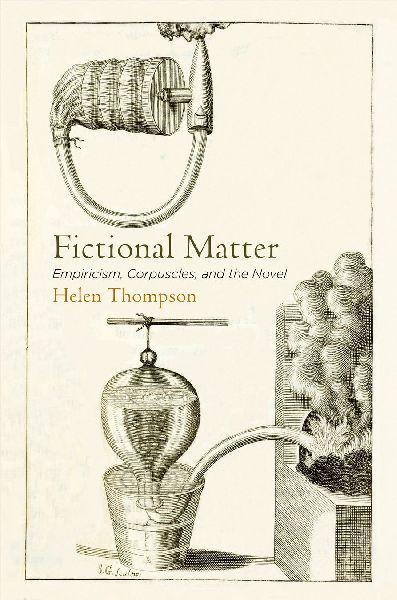
In a groundbreaking study of the relationship between chemistry and literary history, Helen Thompson explores the ways in which chemical conceptions of matter shaped eighteenth-century British culture. Although the scientific revolution championed experimental, sense-based knowledge, chemists claimed that perceptible bodies were made of invisible particles or "corpuscles." Neither modern elements nor classical atoms, corpuscles were reactive, divisible units of matter. Imperceptible but real, the corpuscle transformed empirical knowledge in early modern science and the novel. Thompson offers new analyses of the chemistry, alchemy, color theory, physiology, environmental science, and medicine pioneered by Robert Boyle, Isaac Newton, Stephen Hales, John Mitchell, John Arbuthnot, and Thomas Sydenham to argue that they shaped cultural conceptions of racial, class, sex, and species identity. Juxtaposing science with readings of novels by Daniel Defoe, Eliza Haywood, Jonathan Swift, Samuel Richardson, Henry Fielding, William Rufus Chetwood, and Penelope Aubin, she shows how, at the level of form as well as character, novels represent perceptual knowledge that refers not to innate essence but to dynamic and unstable relations. The realist narrative mode that experimental science bequeaths to literary history, Fictional Matter argues, does not transparently mirror perceptible objects. Instead, novels represent the forms and relations through which imperceptible particles stimulate sensory experience. In this lucid, revisionary analysis of corpuscular chemistry, Thompson advances a new account of the influence of experimental science and empirical knowledge on the emergent realist novel.
| Themen | Biographie, Literatur und Literaturwissenschaft Geschichte und Kritik Literaturwissenschaft, allgemein |
|---|---|
| ISBN | 9780812248722 |
| Sprache | Englisch |
| Erscheinungsdatum | 13.01.2017 |
| Größe | 231 x 155 mm |
| Verlag | University of Pennsylvania Press |
| Lieferzeit | Lieferung innerhalb von 28 Werktagen |
| Herstellerangaben | Anzeigen Libri GmbH Europaallee 1 | D-36244 Bad Hersfeld gpsr@libri.de |
Wie gefällt Ihnen unser Shop?