GUTSCHEIN
Bitte haben Sie einen Moment Geduld, wir legen Ihr Produkt in den Warenkorb.
Diese Produkte könnten Sie auch interessieren:
Bitte haben Sie einen Moment Geduld, wir legen Ihr Produkt in den Warenkorb.
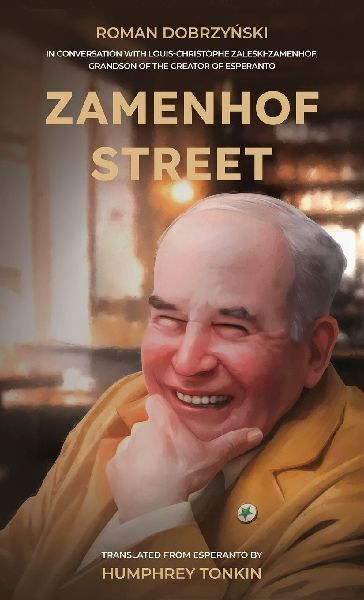
In these remarkable conversations, Louis-Christophe Zaleski-Zamenhof - the sole grandson of the creator of Esperanto - recounts a life that mirrors some of the darkest and most hopeful currents of the twentieth century. As a child, he survived the Nazi Occupation of Poland and the Warsaw Ghetto; as an adult, he became an internationally respected civil and marine engineer, designing daring prestressed-concrete structures ranging from sports complexes to deep-sea oil platforms.Drawn from a series of intimate interviews conducted by the Polish journalist and Esperantist Roman Dobrzyński, Zamenhof Street moves effortlessly between personal memory and wider reflection. Zaleski-Zamenhof speaks not only of survival and loss, but also of a bold future - of engineering, the development of science and technology along ethical principles, and "bridges of hope" for the modern world. Interwoven throughout is the story of Esperanto itself: its origins, ideals, trials, and enduring relevance as a project rooted in dialogue, equality, and human connection.At once a testimony, a historical document, and a conversation be-tween two friends, Zamenhof Street was translated from Esperanto to mark the centenary of Louis-Christophe Zaleski-Zamenhof's birth; by sorrowful coincidence, Roman Dobrzyński himself passed away in the jubilee year, as the book neared completion. It stands as a tribute to both men, and to a vision of humanity that insists, even after unimaginable darkness, on the possibility of understanding.
Wie gefällt Ihnen unser Shop?