GUTSCHEIN
Bitte haben Sie einen Moment Geduld, wir legen Ihr Produkt in den Warenkorb.
Diese Produkte könnten Sie auch interessieren:
Bitte haben Sie einen Moment Geduld, wir legen Ihr Produkt in den Warenkorb.
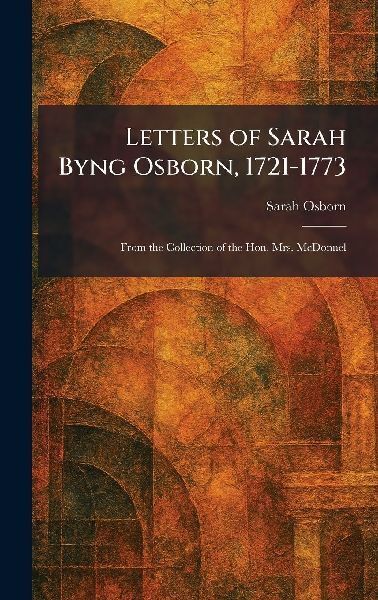
"Letters of Sarah Byng Osborn, 1721-1773" presents a rich collection of personal correspondence that illuminates the social and domestic life of 18th-century England. Sarah Byng Osborn, a woman of significant social standing and resilience, provides a vivid account of her life and times through these preserved letters. Spanning the years 1721 to 1773, the writing offers a first-hand perspective on the challenges and triumphs of the Georgian era, from the intricacies of family politics to the broader shifts in British society. The collection is particularly noted for its depiction of the life of the landed gentry and the specific legal and social hurdles faced by women of the period. As the sister of the ill-fated Admiral John Byng, Osborn's letters also touch upon significant public events, yet they remain grounded in the personal details that bring history to life. This work serves as an invaluable primary source for historians and a captivating read for anyone interested in the epistolary form or the lived experience of the 1700s. "Letters of Sarah Byng Osborn, 1721-1773" stands as a testament to the power of personal narrative in documenting the complexities of the past.This work has been selected by scholars as being culturally important, and is part of the knowledge base of civilization as we know it. This work was reproduced from the original artifact, and remains as true to the original work as possible. Therefore, you may see the original copyright references, library stamps (as most of these works have been housed in our most important libraries around the world), and other notations in the work.This work is in the public domain in the United States of America, and possibly other nations. Within the United States, you may freely copy and distribute this work, as no entity (individual or corporate) has a copyright on the body of the work.As a reproduction of a historical artifact, this work may contain missing or blurred pages, poor pictures, errant marks, etc. Scholars believe, and we concur, that this work is important enough to be preserved, reproduced, and made generally available to the public. We appreciate your support of the preservation process, and thank you for being an important part of keeping this knowledge alive and relevant.
Wie gefällt Ihnen unser Shop?