GUTSCHEIN
Bitte haben Sie einen Moment Geduld, wir legen Ihr Produkt in den Warenkorb.
Diese Produkte könnten Sie auch interessieren:
Bitte haben Sie einen Moment Geduld, wir legen Ihr Produkt in den Warenkorb.
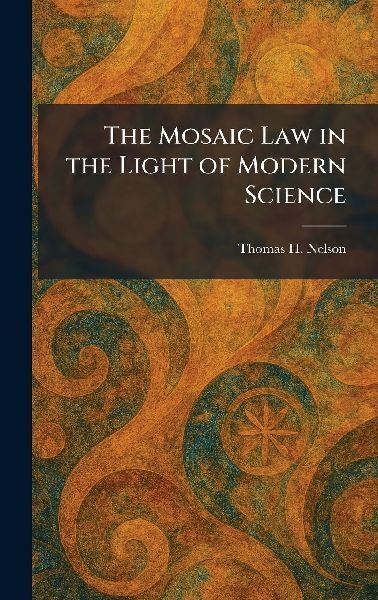
"The Mosaic Law in the Light of Modern Science" provides an insightful exploration into the ancient legal and religious codes of the Old Testament through the lens of early 20th-century scientific understanding. Written by Thomas H. Nelson, an evangelist, this work seeks to demonstrate the practical and enduring wisdom contained within the Pentateuch. The book examines the laws of Moses not merely as spiritual mandates but as foundational principles of hygiene, public health, and social order that align with the discoveries of modern science.Nelson delves into specific aspects of the Mosaic code, including dietary restrictions, quarantine practices, and moral guidelines, arguing that these ancient statutes anticipated modern medical and sociological insights by thousands of years. By bridging the gap between faith and reason, the author aims to validate the divine inspiration of the Hebrew scriptures for a contemporary audience. This volume serves as a fascinating perspective on the Christian apologetics movement, offering a unique look at the reconciliation of biblical tradition with scientific advancement.This study is an essential resource for those interested in the history of science and religion, biblical archaeology, and the development of religious ethics. Through a systematic analysis, Nelson highlights the sophistication of the "Mosaic Law" and its perceived relevance in a rapidly changing intellectual landscape.This work has been selected by scholars as being culturally important, and is part of the knowledge base of civilization as we know it. This work was reproduced from the original artifact, and remains as true to the original work as possible. Therefore, you may see the original copyright references, library stamps (as most of these works have been housed in our most important libraries around the world), and other notations in the work.This work is in the public domain in the United States of America, and possibly other nations. Within the United States, you may freely copy and distribute this work, as no entity (individual or corporate) has a copyright on the body of the work.As a reproduction of a historical artifact, this work may contain missing or blurred pages, poor pictures, errant marks, etc. Scholars believe, and we concur, that this work is important enough to be preserved, reproduced, and made generally available to the public. We appreciate your support of the preservation process, and thank you for being an important part of keeping this knowledge alive and relevant.
Wie gefällt Ihnen unser Shop?