GUTSCHEIN
Bitte haben Sie einen Moment Geduld, wir legen Ihr Produkt in den Warenkorb.
Diese Produkte könnten Sie auch interessieren:
Bitte haben Sie einen Moment Geduld, wir legen Ihr Produkt in den Warenkorb.
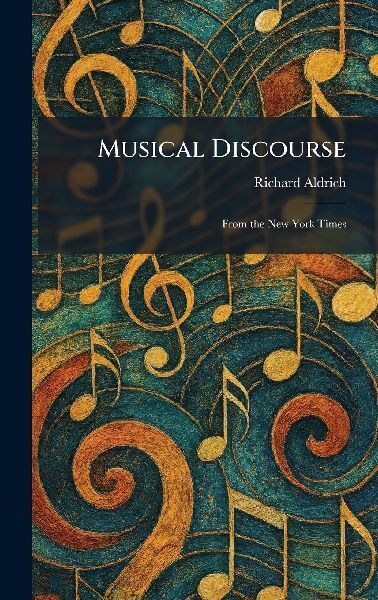
"Musical Discourse, From the New York Times" is a sophisticated collection of essays and critiques authored by the renowned music critic Richard Aldrich. This work brings together a series of insightful reflections on the development of musical performance and composition during the late 19th and early 20th centuries, drawing from his distinguished tenure as a leading voice in American arts journalism.Within these pages, Aldrich examines a diverse array of subjects, from the operatic masterworks of Richard Wagner to the symphonic contributions of Johannes Brahms and Richard Strauss. His writing offers a meticulous analysis of both musical theory and the practicalities of performance, capturing the evolving tastes and the artistic debates that defined the era. The collection serves as an invaluable record of musical reception, providing readers with a window into the cultural landscape of the time.Characterized by deep erudition and a discerning ear, "Musical Discourse, From the New York Times" remains an essential resource for scholars, musicians, and enthusiasts. It offers a profound exploration of the cultural significance of music and the art of criticism itself, preserving the critical perspectives that shaped the appreciation of classical music in the United States during a period of significant artistic transition.This work has been selected by scholars as being culturally important, and is part of the knowledge base of civilization as we know it. This work was reproduced from the original artifact, and remains as true to the original work as possible. Therefore, you may see the original copyright references, library stamps (as most of these works have been housed in our most important libraries around the world), and other notations in the work.This work is in the public domain in the United States of America, and possibly other nations. Within the United States, you may freely copy and distribute this work, as no entity (individual or corporate) has a copyright on the body of the work.As a reproduction of a historical artifact, this work may contain missing or blurred pages, poor pictures, errant marks, etc. Scholars believe, and we concur, that this work is important enough to be preserved, reproduced, and made generally available to the public. We appreciate your support of the preservation process, and thank you for being an important part of keeping this knowledge alive and relevant.
Wie gefällt Ihnen unser Shop?