GUTSCHEIN
Bitte haben Sie einen Moment Geduld, wir legen Ihr Produkt in den Warenkorb.
Diese Produkte könnten Sie auch interessieren:
Bitte haben Sie einen Moment Geduld, wir legen Ihr Produkt in den Warenkorb.
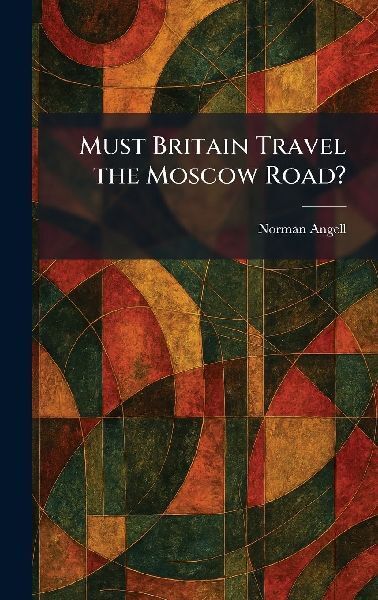
"Must Britain Travel the Moscow Road?" is a trenchant political and economic analysis by the Nobel Peace Prize-winning author Norman Angell. Written during a period of significant social unrest and the rising influence of the Bolshevik Revolution, this work examines the ideological and practical tensions between British democratic traditions and the revolutionary Soviet model. Angell scrutinizes the economic theories driving the communist movement and questions whether such a path is viable or desirable for the British labor movement and the nation's future stability.The text delves into the complexities of post-World War I international relations, industrial disputes, and the search for an effective social organization that avoids the pitfalls of violent upheaval. By contrasting the socio-political landscape of Great Britain with the realities of Moscow's revolutionary governance, Angell provides a reasoned critique of extremist solutions. This work remains a significant historical document for understanding the intellectual debates that shaped early 20th-century British politics and the global reception of socialist ideologies. It offers valuable insights into the era's philosophical struggle to define a path toward economic justice without sacrificing parliamentary democracy.This work has been selected by scholars as being culturally important, and is part of the knowledge base of civilization as we know it. This work was reproduced from the original artifact, and remains as true to the original work as possible. Therefore, you may see the original copyright references, library stamps (as most of these works have been housed in our most important libraries around the world), and other notations in the work.This work is in the public domain in the United States of America, and possibly other nations. Within the United States, you may freely copy and distribute this work, as no entity (individual or corporate) has a copyright on the body of the work.As a reproduction of a historical artifact, this work may contain missing or blurred pages, poor pictures, errant marks, etc. Scholars believe, and we concur, that this work is important enough to be preserved, reproduced, and made generally available to the public. We appreciate your support of the preservation process, and thank you for being an important part of keeping this knowledge alive and relevant.
Wie gefällt Ihnen unser Shop?