GUTSCHEIN
Bitte haben Sie einen Moment Geduld, wir legen Ihr Produkt in den Warenkorb.
Diese Produkte könnten Sie auch interessieren:
Bitte haben Sie einen Moment Geduld, wir legen Ihr Produkt in den Warenkorb.
| Reihe | BiblioScholar |
|---|---|
| ISBN | 9781288300952 |
| Sprache | Englisch |
| Erscheinungsdatum | 15.11.2012 |
| Größe | 234 x 156 mm |
| Verlag | Tradd Street Press |
| Lieferzeit | Lieferung in 7-14 Werktagen |
| Herstellerangaben | Anzeigen Libri GmbH Europaallee 1 | D-36244 Bad Hersfeld gpsr@libri.de |
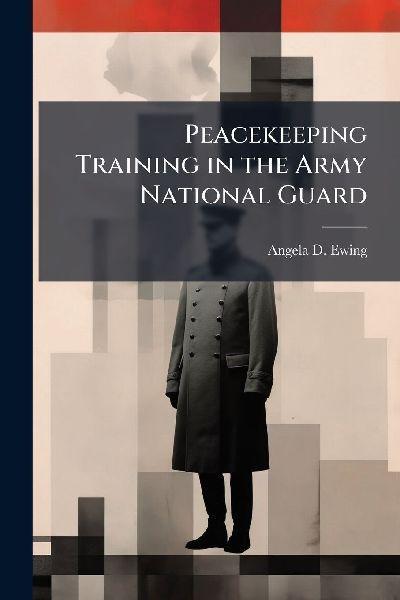
Should all of the Army National Guard 's divisions include peacekeeping tasks in their Mission Essential Task Lists (METL)? Most ARNG units focus their training efforts on traditional combat arms tasks, and only after they receive a peacekeeping mission do they execute pre-deployment PKO proficiency training. Following the model of alert-train-deploy rather than train-alert-deploy places additional stress not only on the deploying unit, but also on external units that are assisting with the mobilization process. FM 7-0, Training the Force, dictates that Army units use the train-alert-deploy model. Arguments against the research question include issues related to lack of training time, a required change in culture to deal with a more restrictive set of rules of engagement (ROE), and little information on which theater of operations the unit should focus. Arguments supporting peacekeeping METL tasks in the Guard are many. The ARNG mission statement and posture statement address peace operations. The QDR requires all units to operate in a full-spectrum environment. Guard units that routinely train in PKO may alleviate the four to six week train-up requirement at the mobilization station. Evidence shows that the likelihood of the ARNG continuing to participate in smaller-scale contingency operations is very high. Several lessons learned documents from PKO missions state that units 19 METL should include peacekeeping tasks. The arguments do not address retention, equipment, or force structure. This study evaluates the arguments for and against the research question by using the criteria of readiness, compliance with Federal directives, and legitimacy. Divisions that regularly train on PKO tasks will sustain the unit 's PKO support. Increased proficiency at home station improves readiness. If readiness is better, then the primary research question is supported. The Quadrennial Defense Review (QDR) dictates that the Army maintain the ability of operating in a full-spectru
| Reihe | BiblioScholar |
|---|---|
| ISBN | 9781288300952 |
| Sprache | Englisch |
| Erscheinungsdatum | 15.11.2012 |
| Größe | 234 x 156 mm |
| Verlag | Tradd Street Press |
| Lieferzeit | Lieferung in 7-14 Werktagen |
| Herstellerangaben | Anzeigen Libri GmbH Europaallee 1 | D-36244 Bad Hersfeld gpsr@libri.de |
Wie gefällt Ihnen unser Shop?