GUTSCHEIN
Bitte haben Sie einen Moment Geduld, wir legen Ihr Produkt in den Warenkorb.
Diese Produkte könnten Sie auch interessieren:
Bitte haben Sie einen Moment Geduld, wir legen Ihr Produkt in den Warenkorb.
| Reihe | BiblioScholar |
|---|---|
| ISBN | 9781288322473 |
| Sprache | Englisch |
| Erscheinungsdatum | 21.11.2012 |
| Größe | 234 x 156 mm |
| Verlag | Legare Street Press |
| Lieferzeit | Lieferung in 7-14 Werktagen |
| Herstellerangaben | Anzeigen Libri GmbH Europaallee 1 | D-36244 Bad Hersfeld gpsr@libri.de |
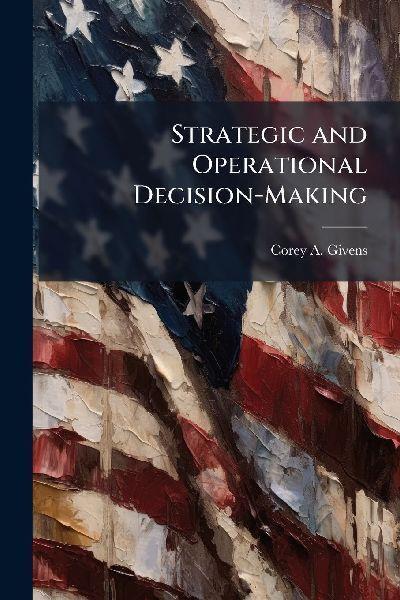
The United States and Japan had a very contentious relationship between 1939 and 1941. During this time, Japan's strategic objectives focused on the desire for a policy of national self-sufficiency and of non-reliance on Western imports or economic aid. Its major operational objective was the Dutch East Indies, where Japan imported its oil, rubber, and a number of other goods. Japan fully pursued its objectives as the armed forces provided the foundation for plans to identify, protect, modernize, and expand its national interests. Conversely, the weakness of the United States' military restricted its strategic and operational objectives. One of the strategic objectives for the United States was to uphold the principles of the Open Door in East Asia. However, the United States was unable to embark upon punitive measures to protest Japan's seizure and economic assimilation of Manchuria. America's key operational objective was maintenance of the Philippines, a place from which the United States could project its power. For state actors, keeping the elements of national power, or Diplomacy, Information, Military, and Economy (DIME) in alignment is significant for national stability. An analysis of America's DIME construct reveals how the weakness of the United States' military forced it to rely on the Diplomatic and Economic elements of national power, and this negatively affected the way the United States conducted its strategic and operational decision-making with imperial Japan from 1939-1941. Diplomatically, American policy intended to uphold the Open Door Policy in the Far East; however, its foreign policy was weak because it did not have the necessary military might to back its demands. Therefore, the United States resorted to economic pressure. It implemented a policy of escalating deterrence in an effort to stop Japanese expansion. The economic pressure became too much when the United States deprived Japan of oil, which was a major commodity that the Japanese c
| Reihe | BiblioScholar |
|---|---|
| ISBN | 9781288322473 |
| Sprache | Englisch |
| Erscheinungsdatum | 21.11.2012 |
| Größe | 234 x 156 mm |
| Verlag | Legare Street Press |
| Lieferzeit | Lieferung in 7-14 Werktagen |
| Herstellerangaben | Anzeigen Libri GmbH Europaallee 1 | D-36244 Bad Hersfeld gpsr@libri.de |
Wie gefällt Ihnen unser Shop?