GUTSCHEIN
Bitte haben Sie einen Moment Geduld, wir legen Ihr Produkt in den Warenkorb.
Diese Produkte könnten Sie auch interessieren:
Bitte haben Sie einen Moment Geduld, wir legen Ihr Produkt in den Warenkorb.
| Reihe | SUNY series in Chinese Philosophy and Culture |
|---|---|
| Themen | Biographie, Literatur und Literaturwissenschaft Geschichte und Kritik |
| ISBN | 9781438495392 |
| Sprache | Englisch |
| Erscheinungsdatum | 01.03.2024 |
| Größe | 235 x 157 mm |
| Verlag | SUNY Press |
| Lieferzeit | Lieferung in 7-14 Werktagen |
| Herstellerangaben | Anzeigen Libri GmbH Europaallee 1 | D-36244 Bad Hersfeld gpsr@libri.de |
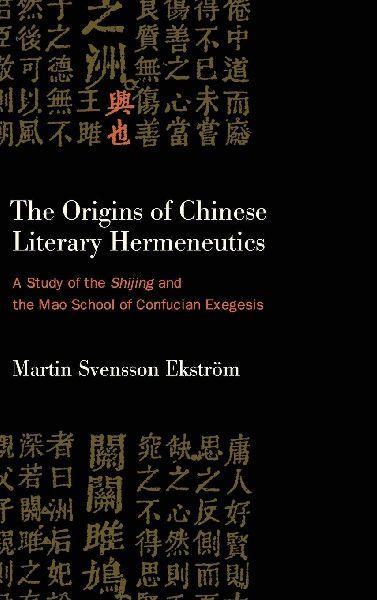
Explores how China's oldest poetry collection was interpreted in a Confucian exegetical text-the Mao Commentary-in the mid-second century BCE.The Shijing ("Canon of Odes") is China's oldest poetry collection, traditionally considered to have been edited by Confucius himself. Despite their enormous importance for Confucianism and Chinese civilization, the 305 odes have for millennia also puzzled readers. Why did the Sage include in the Canon apparently lewd poems about women promising men to "hitch up" their skirts and "wade the river," and men "tossing and turning in bed" yearning for young women? What did the innumerable representations of plants, beasts, and birds, and of various climactic and astronomical phenomena, signify beyond their immediate function as natural descriptions?One such puzzled reader was Mao Heng, a learned Confucian employed at a minor court in the mid-second century BCE. The object of this study is the Commentary that Mao composed on the Odes, and in particular the hermeneutic tool-the xing-that he invented to explain the figurality and tropes at play in them. Mao's "xingish" interpretation of the Odes is both genuinely hermeneutic, in that it explains the rhetorical organization of these poems, and thoroughly ideological, since it allows Mao to transform them into Confucian dogma. The book also argues that the xing, content, function, and cultural importance, is comparable to the Aristotelian concept of metaphor (metaphora), and that the xing, the Odes, and the practice of shi (Chinese "poetry") demand an intercultural, "comparative" reading for a more nuanced understanding.
| Reihe | SUNY series in Chinese Philosophy and Culture |
|---|---|
| Themen | Biographie, Literatur und Literaturwissenschaft Geschichte und Kritik |
| ISBN | 9781438495392 |
| Sprache | Englisch |
| Erscheinungsdatum | 01.03.2024 |
| Größe | 235 x 157 mm |
| Verlag | SUNY Press |
| Lieferzeit | Lieferung in 7-14 Werktagen |
| Herstellerangaben | Anzeigen Libri GmbH Europaallee 1 | D-36244 Bad Hersfeld gpsr@libri.de |
Wie gefällt Ihnen unser Shop?