GUTSCHEIN
Bitte haben Sie einen Moment Geduld, wir legen Ihr Produkt in den Warenkorb.
Diese Produkte könnten Sie auch interessieren:
Bitte haben Sie einen Moment Geduld, wir legen Ihr Produkt in den Warenkorb.
| Reihe | World Bank Publications |
|---|---|
| ISBN | 9781464801419 |
| Sprache | Englisch |
| Erscheinungsdatum | 08.03.2014 |
| Größe | 254 x 178 mm |
| Verlag | World Bank Publications |
| Lieferzeit | Lieferung in 7-14 Werktagen |
| Herstellerangaben | Anzeigen gpsr@mare-nostrum.co.uk |
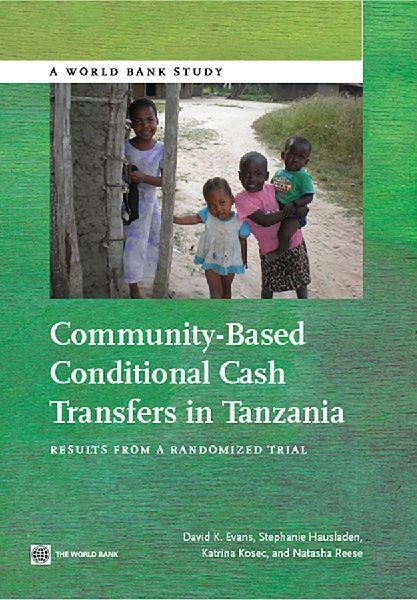
Given the success of conditional cash transfer (CCT) programmes elsewhere, in 2010 the Government of Tanzania rolled out a pilot CCT programme in three districts. Its aim was to see if, using a model relying on communities to target beneficiaries and deliver payments, the programme could improve outcomes for the poor the way centrally-run CCT programmes have in other contexts. The programme provided cash payments to poor households, but conditioned payments on complying with certain health and education requirements. Given scarce resources, the Government randomly selected 40 out of 80 eligible villages to receive the pilot programme. Households in participating and comparison villages were broadly comparable at baseline. This report describes the programme and the results of a rigorous, mixed methods impact evaluation.Two and a half years into the programme, participating households were healthier and more educated. Health improvements due to the CCT programme were greatest for the poorest half of households - the poorest of the poor. They experienced a half a day per month reduction in sick days on average, and poor children age 0-4 in particular had a full day per month reduction in sick days. In education, the programme showed clear positive impacts on whether children had ever attended school and on whether they completed Standard 7. Households were also more likely to buy shoes for children, which can promote both health and school attendance.In response to the programme, households also made investments to reduce risk: Participating households were much more likely to finance medical care with insurance and much more likely to purchase health insurance than were their comparison counterparts. The programme did not significantly affect savings on average, although it did increase non-bank savings amongst the poorest half of households. Participating households also invested in more livestock assets, which they used to create small enterprises. The programme did not, however, have significant impacts on food consumption.On the whole, the results suggest that households focused on reducing risk and on improving their livelihoods rather than principally on increasing consumption. There is also evidence that the project had positive effects on community cohesion.
| Reihe | World Bank Publications |
|---|---|
| ISBN | 9781464801419 |
| Sprache | Englisch |
| Erscheinungsdatum | 08.03.2014 |
| Größe | 254 x 178 mm |
| Verlag | World Bank Publications |
| Lieferzeit | Lieferung in 7-14 Werktagen |
| Herstellerangaben | Anzeigen gpsr@mare-nostrum.co.uk |
Wie gefällt Ihnen unser Shop?