GUTSCHEIN
Bitte haben Sie einen Moment Geduld, wir legen Ihr Produkt in den Warenkorb.
Diese Produkte könnten Sie auch interessieren:
Bitte haben Sie einen Moment Geduld, wir legen Ihr Produkt in den Warenkorb.
| Reihe | No Series Linked |
|---|---|
| Themen | Geschichte und Archäologie Geschichte Militärgeschichte |
| ISBN | 9781474542265 |
| Sprache | Englisch |
| Erscheinungsdatum | 23.03.2026 |
| Größe | 280 x 216 mm |
| Verlag | Naval & Military Press |
| Lieferzeit | Lieferung in 7-14 Werktagen |
| Herstellerangaben | Anzeigen Libri GmbH Europaallee 1 | D-36244 Bad Hersfeld gpsr@libri.de |
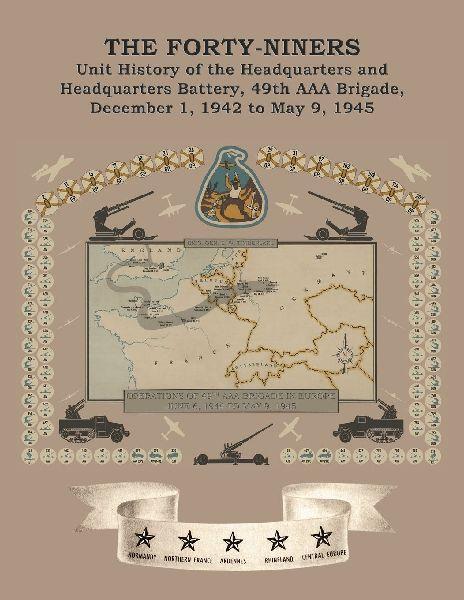
During the Normandy invasion, the 49th AAA Brigade emerged as a critical component of Allied air defence. On D-Day, 6 June 1944, the brigade-commanding four AAA groups comprising thirteen battalions-was tasked with securing the airspace over both Omaha and Utah Beaches. Under the command of Brigadier General Edward Timberlake, the brigade provided the initial protective shield against Luftwaffe attack, enabling the successful establishment of the beachheads and the sustained flow of men and materiel ashore.Following the liberation of France and Belgium, the brigade assumed a central role in countering Germany's V-1 flying bomb campaign. Stationed in defence of the strategically vital port of Antwerp, its units developed and executed one of the most effective antiaircraft responses of the war. The brigade is officially credited with destroying more than 1,000 V-1 "buzz bombs," a contribution that significantly reduced disruption to Allied logistics and safeguarded the principal supply hub for operations in Northwest Europe.As Allied forces advanced, the brigade moved in close support of the First Army through France, Belgium, and into Germany. Its battalions provided continuous air defence for critical assets, including forward airfields, ammunition depots, transportation nodes, and key engineering achievements such as the Remagen Bridge. This mobile protective role ensured operational continuity during rapid advances and under persistent aerial threat.By June 1944, the brigade's composition reflected the technological and tactical diversity of U.S. antiaircraft forces. Medium battalions were equipped with towed 90mm guns capable of engaging high-altitude targets. Automatic weapons battalions employed 40mm Bofors guns and quadruple.50-caliber machine guns for low-altitude defence. Self-propelled battalions mounted 37mm guns and.50-caliber machine guns on half-tracks, providing mobility to accompany advancing ground forces. Specialised units, including searchlight and barrage balloon battalions, augmented night defence and airspace denial.Together, these elements illustrate the brigade's adaptability and operational significance, marking it as a key contributor to Allied success in the air defence of the European campaign.Originally printed by the 654th Engineer Topographic Battalion, a US Army unit active during World War II. This unit was responsible for technical operations, mapping, and engineering intelligence, with historical reports detailing specialised work. Gestetner processed type, and "in the field" photographic illustrations fall short of modern printing standards.
| Reihe | No Series Linked |
|---|---|
| Themen | Geschichte und Archäologie Geschichte Militärgeschichte |
| ISBN | 9781474542265 |
| Sprache | Englisch |
| Erscheinungsdatum | 23.03.2026 |
| Größe | 280 x 216 mm |
| Verlag | Naval & Military Press |
| Lieferzeit | Lieferung in 7-14 Werktagen |
| Herstellerangaben | Anzeigen Libri GmbH Europaallee 1 | D-36244 Bad Hersfeld gpsr@libri.de |
Wie gefällt Ihnen unser Shop?