GUTSCHEIN
Bitte haben Sie einen Moment Geduld, wir legen Ihr Produkt in den Warenkorb.
Diese Produkte könnten Sie auch interessieren:
Bitte haben Sie einen Moment Geduld, wir legen Ihr Produkt in den Warenkorb.
| Themen | Philosophie und Religion Religion und Glaube Weitere Religionen und Glaubensrichtungen Ostasiatische Religionen und spirituelle Überzeugungen |
|---|---|
| ISBN | 9781611170009 |
| Sprache | Englisch |
| Erscheinungsdatum | 12.10.2011 |
| Größe | 243 x 161 mm |
| Verlag | University of South Carolina Press |
| Lieferzeit | Lieferung innerhalb von 28 Werktagen |
| Herstellerangaben | Anzeigen Doelen 72 Breda 4831 GR NL gpsr@mare-nostrum.co.uk |
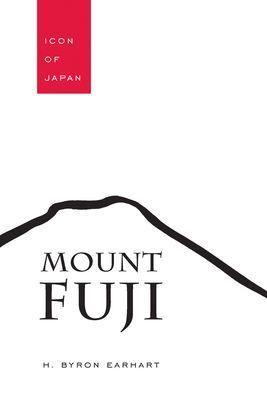
The first comprehensive English-language study of the evolving religious and aesthetic symbolism of the world's most famous mountainIllustrated with color and black-and-white images of the mountain and its associated religious practices, H. Byron Earhart's study utilizes his decades of fieldwork--including climbing Fuji with three pilgrimage groups--and his research into Japanese and Western sources to offer a comprehensive overview of the evolving imagery of Mount Fuji from ancient times to the present day. Included in the book is a link to his twenty-eight minute streaming video documentary of Fuji pilgrimage and practice, Fuji: Sacred Mountain of Japan. Beginning with early reflections on the beauty and power associated with the mountain in medieval Japanese literature, Earhart examines how these qualities fostered spiritual practices such as Shugendo, which established rituals and a temple complex at the mountain as a portal to an ascetic otherworld. As a focus of worship, the mountain became a source of spiritual insight, rebirth, and prophecy through the practitioners Kakugyo and Jikigyo, whose teachings led to social movements such as Fujido (the way of Fuji) and to a variety of pilgrimage confraternities making images and replicas of the mountain for use in local rituals. Earhart shows how the seventeenth-century commodification of Mount Fuji inspired powerful interpretive renderings of the "peerless" mountain of Japan, such as those of the nineteenth-century print masters Hiroshige and Hokusai, which were largely responsible for creating the international reputation of Mount Fuji. In the eighteenth and nineteenth centuries, images of Fuji served as an expression of a unique and superior Japanese culture. With its distinctive shape firmly embedded in Japanese culture but its ethical, ritual, and spiritual associations made malleable over time, Mount Fuji came to symbolize ultranationalistic ambitions in the 1930s and early 1940s, peacetime democracy as early as 1946, and a host of artistic, naturalistic, and commercial causes, even the exotic and erotic, in the decades since.
| Themen | Philosophie und Religion Religion und Glaube Weitere Religionen und Glaubensrichtungen Ostasiatische Religionen und spirituelle Überzeugungen |
|---|---|
| ISBN | 9781611170009 |
| Sprache | Englisch |
| Erscheinungsdatum | 12.10.2011 |
| Größe | 243 x 161 mm |
| Verlag | University of South Carolina Press |
| Lieferzeit | Lieferung innerhalb von 28 Werktagen |
| Herstellerangaben | Anzeigen Doelen 72 Breda 4831 GR NL gpsr@mare-nostrum.co.uk |
Wie gefällt Ihnen unser Shop?