GUTSCHEIN
Bitte haben Sie einen Moment Geduld, wir legen Ihr Produkt in den Warenkorb.
Diese Produkte könnten Sie auch interessieren:
Bitte haben Sie einen Moment Geduld, wir legen Ihr Produkt in den Warenkorb.
| ISBN | 9781639231287 |
|---|---|
| Sprache | Englisch |
| Erscheinungsdatum | 02.06.2023 |
| Größe | 222 x 145 mm |
| Verlag | Lushena Books |
| Lieferzeit | Lieferung innerhalb von 28 Werktagen |
| Herstellerangaben | Anzeigen Libri GmbH Europaallee 1 | D-36244 Bad Hersfeld gpsr@libri.de |
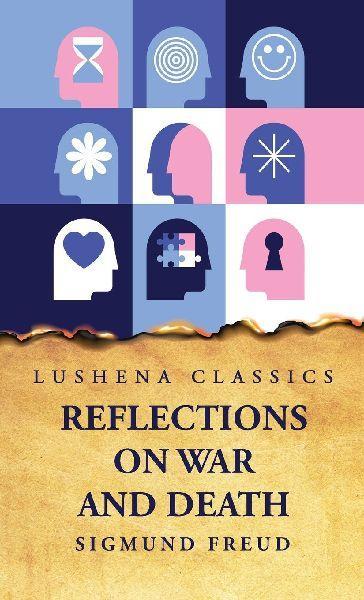
Reflections on War and Death is a classic historical psychology study by Sigmund Freud. Thoughts for the Time of War and Death is a set of twin essays written by Sigmund Freud in 1915, six months after the outbreak of World War I. The essays express discontent and disillusionment with human nature and human society in the aftermath of the hostilities; and generated much interest among lay readers of Freud. The first essay addressed the widespread disillusionment brought on by the collapse of the Pax Britannica of the preceding century-what Freud called "the common civilization of peacetime. The second essay addressed what Freud called the peacetime 'protection racket' whereby the inevitability of death was expunged from civilized mentality. Building on the second essay of Totem and Taboo, Freud argued that such an attitude left civilians in particular unprepared for the stark horror of industrial-scale death in the Great War. Freud's account of the centrality of loss in culture has been seen as seminal for his later work, Civilization and its Discontents. Caught in the whirlwind of these war times, without any real information or any perspective upon the great changes that have already occurred or are about to be enacted, lacking all premonition of the future, it is small wonder that we ourselves become confused as to the meaning of impressions which crowd in upon us or of the value of the judgments we are forming. It would seem as though no event had ever destroyed so much of the precious heritage of mankind, confused so many of the clearest intellects or so thoroughly debased what is highest.
| ISBN | 9781639231287 |
|---|---|
| Sprache | Englisch |
| Erscheinungsdatum | 02.06.2023 |
| Größe | 222 x 145 mm |
| Verlag | Lushena Books |
| Lieferzeit | Lieferung innerhalb von 28 Werktagen |
| Herstellerangaben | Anzeigen Libri GmbH Europaallee 1 | D-36244 Bad Hersfeld gpsr@libri.de |
Wie gefällt Ihnen unser Shop?