GUTSCHEIN
Bitte haben Sie einen Moment Geduld, wir legen Ihr Produkt in den Warenkorb.
Diese Produkte könnten Sie auch interessieren:
Auch verfügbar als:
Bitte haben Sie einen Moment Geduld, wir legen Ihr Produkt in den Warenkorb.
| Reihe | Topics in Biodiversity and Conservation |
|---|---|
| Themen | Mathematik und Naturwissenschaften Biologie, Biowissenschaften Biowissenschaften, allgemein Ökologie, Biosphäre |
| ISBN | 9783319500317 |
| Sprache | Englisch |
| Erscheinungsdatum | 30.12.2016 |
| Größe | 23.5 x 15.5 cm |
| Verlag | Springer International Publishing |
| Lieferzeit | Lieferung in 7-14 Werktagen |
| Herstellerangaben | Anzeigen Springer Nature Customer Service Center GmbH Europaplatz 3 | DE-69115 Heidelberg ProductSafety@springernature.com |
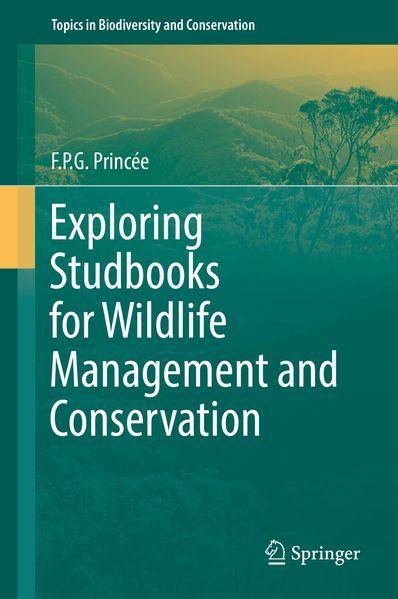
Many endangered species of wild animals are managed in captivity through studbooks. In this book these data-rich resources are mined in innovative, integrated and statistically tested ways to maximise information gain for conservation practice – whether for captive or released/reintroduced or managed wild populations. This book is thus an important tool for all species managers, and for students and researchers in small population biology and wildlife conservation.
The book's studbook analyses are grouped in three interrelated sections: natural history, demography and genetics. Statistical tests to determine the significance of results or to compare results between subgroups are undertaken throughout. Real studbooks of a variety of species, e.g. cranes, wolverines, blesbok, illustrate the practical applications and interpretations of the analyses and statistics. The “natural history” section presents analyses to determine baseline species information such as litter size, inter-birth interval, longevity and seasonality. “Demography” covers census(-style) analyses, age-class based life tables, comparative survival analyses and population projections. Solutions for dealing with small sample sizes are included.Inbreeding depression and unconscious selection form the main focus of the “genetics” section. Survival and life table analyses are used to assess inbreeding effects. Quantitative genetics methods are applied to natural history traits as a tool to monitor genetic variation. A fourth section on “conservation” shows how data from captive populations can be used where natural history data from wild populations are missing. A real example uses studbook data to inform Population Viability Analysis. The final section deals with issues related to incomplete and missing data and statistical topics.
The purpose-written open-source software programs “Population Management Library (PML)” and “studbookR” used for analyses in the book, are available at www.princee.com.
| Reihe | Topics in Biodiversity and Conservation |
|---|---|
| Themen | Mathematik und Naturwissenschaften Biologie, Biowissenschaften Biowissenschaften, allgemein Ökologie, Biosphäre |
| ISBN | 9783319500317 |
| Sprache | Englisch |
| Erscheinungsdatum | 30.12.2016 |
| Größe | 23.5 x 15.5 cm |
| Verlag | Springer International Publishing |
| Lieferzeit | Lieferung in 7-14 Werktagen |
| Herstellerangaben | Anzeigen Springer Nature Customer Service Center GmbH Europaplatz 3 | DE-69115 Heidelberg ProductSafety@springernature.com |
Wie gefällt Ihnen unser Shop?