GUTSCHEIN
Bitte haben Sie einen Moment Geduld, wir legen Ihr Produkt in den Warenkorb.
Diese Produkte könnten Sie auch interessieren:
Bitte haben Sie einen Moment Geduld, wir legen Ihr Produkt in den Warenkorb.
| Themen | Philosophie und Religion Philosophie Themen der Philosophie Logik |
|---|---|
| ISBN | 9788499538761 |
| Sprache | Englisch |
| Erscheinungsdatum | 01.12.2023 |
| Größe | 210 x 148 mm |
| Verlag | Linkgua Ediciones |
| Lieferzeit | Lieferung in 7-14 Werktagen |
| Herstellerangaben | Anzeigen Libri GmbH Europaallee 1 | D-36244 Bad Hersfeld gpsr@libri.de |
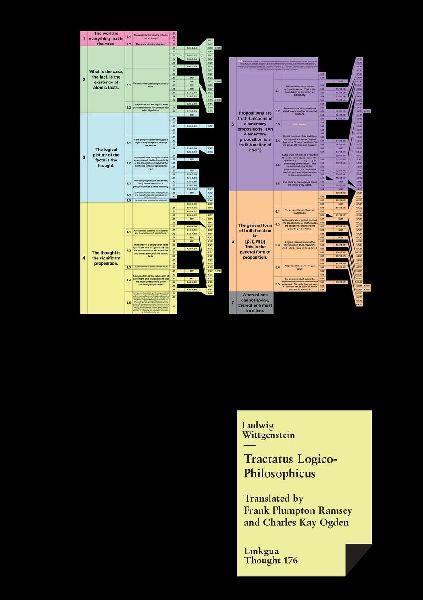
Perhaps this book will be understood only by someone who has himself already had the thoughts that are expressed in it-or at least similar thoughts.-So it is not a textbook.-Its purpose would be achieved if it gave pleasure to one person who read and understood it.The book deals with the problems of philosophy, and shows, I believe, that the reason why these problems are posed is that the logic of our language is mis- understood. The whole sense of the book might be summed up the following words: what can be said at all can be said clearly, and what we cannot talk about we must pass over in silence.Thus the aim of the book is to draw a limit to thought, or rather-not to thought, but to the expression of thoughts: for in order to be able to draw a limit to thought, we should have to find both sides of the limit thinkable (i.e. we should have to be able to think what cannot be thought).It will therefore only be in language that the limit can be drawn, and what lies on the other side of the limit will simply be nonsense.I do not wish to judge how far my efforts coincide with those of other philosophers. Indeed, what I have written here makes no claim to novelty in detail, and the reason why I give no sources is that it is a matter of indifference to me whether the thoughts that I have had have been anticipated by someone else.I will only mention that I am indebted to Frege's great works and to the writings of my friend Mr. Bertrand Russell for much of the stimulation of my thoughts.If this work has any value, it consists in two things: the first is that thoughts are expressed in it, and on this score the better the thoughts are expressed-the more the nail has been hit on the head-the greater will be its value.-Here I am conscious of having fallen a long way short of what is possible. Simply because my powers are too slight for the accomplishment of the task.-May others come and do it better.On the other hand the truth of the thoughts that are here communicated seems to me unassailable and definitive. I therefore believe myself to have found, on all essential points, the final solution of the problems. And if I am not mistaken in this belief, then the second thing in which the of this work consists is that it shows how little is achieved when these problems are solved.L.W. Vienna, 1918
| Themen | Philosophie und Religion Philosophie Themen der Philosophie Logik |
|---|---|
| ISBN | 9788499538761 |
| Sprache | Englisch |
| Erscheinungsdatum | 01.12.2023 |
| Größe | 210 x 148 mm |
| Verlag | Linkgua Ediciones |
| Lieferzeit | Lieferung in 7-14 Werktagen |
| Herstellerangaben | Anzeigen Libri GmbH Europaallee 1 | D-36244 Bad Hersfeld gpsr@libri.de |
Wie gefällt Ihnen unser Shop?