GUTSCHEIN
Bitte haben Sie einen Moment Geduld, wir legen Ihr Produkt in den Warenkorb.
Diese Produkte könnten Sie auch interessieren:
Bitte haben Sie einen Moment Geduld, wir legen Ihr Produkt in den Warenkorb.
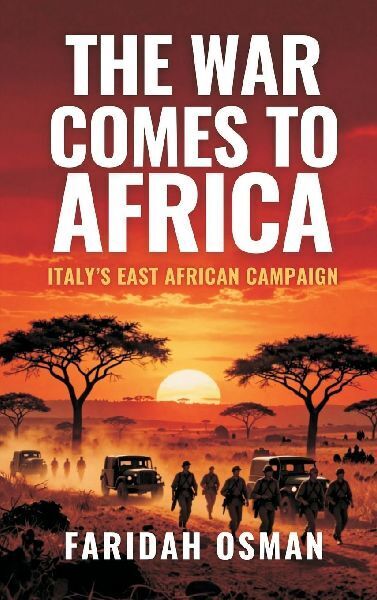
In May 1936, Italian troops paraded through Addis Ababa and Benito Mussolini proclaimed a new Roman empire in East Africa. Less than five years later, that empire had been dismantled, its commanders surrendered, and its colonial subjects on a long road toward restored sovereignty. The War Comes to Africa returns to this brief and consequential interval and asks what its rise and collapse actually reveal about modern empire at war. Faridah Osman treats Italy's East African campaign not as a curtain-raiser to greater European battles, but as a decisive theatre in its own right, where ambition met the hard arithmetic of distance, altitude, supply, and consent.The book moves from Rome's strategic imagination to the highlands and lowlands where it was tested. It examines the composition of Italian forces, the indispensable role of ascari troops, the operational shape of the 1935-36 invasion, the long pacification that never quite succeeded, and the 1941 counter-offensive that converged on the capital from Sudan and Kenya. It treats patriot resistance as a strategic variable rather than background colour, and military logistics as the silent author of operational possibility. It pays close attention to the Mediterranean chokepoint that isolated the theatre, to the air war that wasted away without replacement, and to the multi-national coalition that British command assembled from across the empire. The Italian use of chemical weapons, the reprisals that followed the attempt on Graziani's life, and the symbolic return of Haile Selassie are examined with care and without sentimentality.Written for students of history, policy readers interested in the limits of expeditionary power, and general readers seeking a serious account of an under-examined campaign, the book argues that colonial warfare in East Africa was undone less by enemy arms than by the structural mismatch between imperial ambition and the conditions it had to master. Readers will come away with a clearer framework for understanding why operational gains can prove fragile, why occupation is harder than conquest, and why African theatres belong at the centre of any serious account of the Second World War and the empires that fought it.
Wie gefällt Ihnen unser Shop?