Libri GmbH Europaallee 1 | D-36244 Bad Hersfeld gpsr@libri.de
Unsere Prinzipien
✔ kostenlose Lieferung innerhalb Österreichs ab € 35,–
✔ über 1,5 Mio. Bücher, DVDs & CDs im Angebot
✔ alle FALTER-Produkte und Abos, nur hier!
✔ keine Weitergabe personenbezogener Daten an Dritte
✔ als 100% österreichisches Unternehmen liefern wir innerhalb Österreichs mit der Österreichischen Post
Kurzbeschreibung des Verlags
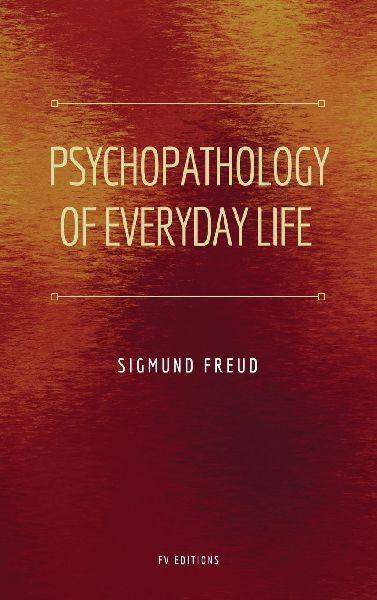
It was while tracing back the abnormal to the normal state that Professor Freud found how faint the line of demarcation was between the normal and neurotic person, and that the psychopathologic mechanisms so glaringly observed in the psychoneuroses and psychoses could usually be demonstrated in a lesser degree in normal persons. This led to a study of the faulty actions of everyday life and later to the publication of the Psychopathology of Everyday Life, a book which passed through four editions in Germany and is considered the author's most popular work. With great ingenuity and penetration the author throws much light on the complex problems of human behaviour, and clearly demonstrates that the hitherto considered impassable gap between normal and abnormal mental states is more apparent than real.This new edition comes with an Easy to Read Layout designed to make reading comfortable.
Libri GmbH Europaallee 1 | D-36244 Bad Hersfeld gpsr@libri.de
Unsere Prinzipien
✔ kostenlose Lieferung innerhalb Österreichs ab € 35,–
✔ über 1,5 Mio. Bücher, DVDs & CDs im Angebot
✔ alle FALTER-Produkte und Abos, nur hier!
✔ keine Weitergabe personenbezogener Daten an Dritte
✔ als 100% österreichisches Unternehmen liefern wir innerhalb Österreichs mit der Österreichischen Post
Über den Autor
Sigmund Freud, geboren am 6. Mai 1856 in Freiberg, ist der Begründer der Psychoanalyse und war ein bedeutender Denker seiner Zeit. Er studierte an der Universität Wien und promovierte 1881 zum Doktor der Medizin. Anschließend arbeitete er am Allgemeinen Krankenhaus in Wien und habilitierte in Neuropathologie. Bald darauf ließ er sich als praktischer Arzt für Neurologie in Wien nieder. 1900 veröffentlichte Sigmund Freud das bekannte Werk "Die Traumdeutung". Zu weiteren bedeutenden Publikationen zählen "Totem und Tabu", "Das Ich und das Es", "Hemmungen, Symtom und Angst" sowie "Das Unbehaben in der Kultur". 1919 gründete er den "Internationalen Psychoanalytischen Verlag". Zu Lebzeiten wurde der Neurologe zum Bürger der Stadt Wien ernannt und mit dem Goethe-Preis der Stadt Frankfurt ausgezeichnet. 1938 emigrierte er nach Großbritannien. Bis zu seinem Tod 1939 praktizierte Sigmund Freud in London.