Kurzbeschreibung des Verlags
A first cut into vegetable tanned hide can wander before the blade reaches the end of the ruler. That moment is frustrating, but it is not proof that hand leathercraft demands rare talent or a workshop full of machinery. It usually means one small part of the setup, grip, angle, pressure, or material choice, has not yet been made clear.
Build the Hand Skills in Order
- Read grain, firmness, ounce weight, and stretch before choosing where a pattern belongs on the hide.- Mark straight lines and curves clearly, then control a craft knife without rushing a long pass.- Punch clean, evenly spaced holes while keeping the stitching chisel aligned from one strike to the next.- Bevel and burnish a cut edge until it feels smooth, sealed, and ready for ordinary use.- Sew a durable saddle stitch with two needles, consistent tension, and a secure lock-off.- Set rivets, snaps, and buckles with hand tools, then diagnose loose or misaligned hardware.
Six Useful Pieces, Not Practice Scraps
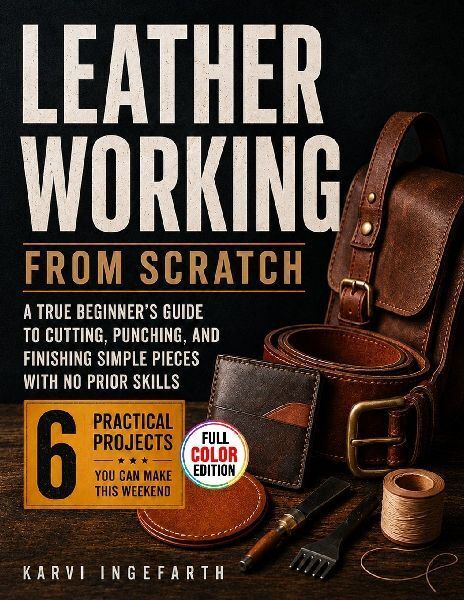
The book moves through sixteen chapters in a deliberate sequence. Eight foundational chapters cover leather selection, tools, preparation, marking, cutting, hole punching, edge treatment, saddle stitching, and hardware. Six project chapters then put those mechanics to work in a slim cardholder, a round coaster set, a riveted key fob, a bifold wallet, a plain belt, and a wrapped tote handle. The final chapters address common mistakes and long-term care. Each project identifies the earlier technique chapters it depends on, so a new operation never appears without an explanation behind it.
What Keeps the Work Manageable
- Every build fits on a small workbench or cleared kitchen table and uses hand tools rather than powered equipment.- Materials lists, measurements, construction diagrams, and numbered instructions keep the next action visible.- Scrap tests catch blade drift, hole spacing, stitch tension, and hardware fit before the real piece is marked.- Troubleshooting sections connect crooked cuts, rough edges, skipped holes, and spinning rivets to specific corrections.- The technique reference and project index make it easy to return to one operation without rereading the whole book.
>The closing care chapter continues past the workbench. It explains cleaning, conditioning, moisture handling, storage, seam checks, hardware care, and minor repairs for vegetable tanned goods that change with use. The result is a leather craft book for readers who want both the making process and the habits that keep a handmade wallet, belt, or key fob in service.
Start with a flat remnant, a ruler, and the first controlled cut; the order for everything after it is already on the page.