GUTSCHEIN
Bitte haben Sie einen Moment Geduld, wir legen Ihr Produkt in den Warenkorb.
Diese Produkte könnten Sie auch interessieren:
Bitte haben Sie einen Moment Geduld, wir legen Ihr Produkt in den Warenkorb.
| Themen | Geschichte und Archäologie Geschichte Geschichte anderer geografischer Gruppierungen |
|---|---|
| ISBN | 9798215595695 |
| Sprache | Englisch |
| Erscheinungsdatum | 30.04.1988 |
| Größe | 229 x 152 mm |
| Verlag | Darvin Babiuk |
| Lieferzeit | Lieferung in 7-14 Werktagen |
| Herstellerangaben | Anzeigen Libri GmbH Europaallee 1 | D-36244 Bad Hersfeld gpsr@libri.de |
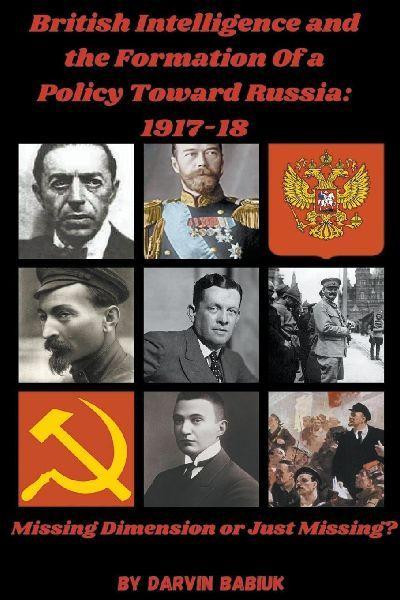
Internal collapse and a succession of varying Russian governments in 1917 necessitated the need for British policy makers to re-evaluate their attitudes toward Russia. It is well-known that this ultimately evolved into hostility towards Bolshevism. What is not so evident is how this decision was arrived at. Nor was it as clear-cut as one might believe. This book makes use of both primary sources and primary sources contained within secondary ones to argue that Britain's policy towards Russia at this time cannot be understood without first exploring the "missing dimension" that intelligence played in shaping the policy makers' final decisions. Unfortunately, at precisely this time, when valid and verifiable information was required from intelligence gathering agencies, these same agencies were suffering from severe handicaps. Official diplomatic relations with the Bolsheviks had been cut off, unofficial representatives did not adequately replace the official presence, covert intelligence operated with little or no accountability to policy, and the system of independent analysis of intelligence designed to provide checks and balances in the decision-making process were inoperative during the First World War. The study is not balanced. It concentrates much more carefully on the British than the Russian side, although Russian policy is explored where it illustrates the ineptitude of British intelligence. As such, it uses the Gregorian rather than the Julian calendar then in use in Russia. By looking at intelligence and analysis related to the March and November Revolutions, Allied intervention, and the decline of British representatives from diplomat to spy the cognate essay confirms Professor Keith Neilson's thesis. Rather than looking at British questions during World War One through the two classic views of civil-military relations or easterners versus westerners, the alternative approach of exploring Britain's relations within its alliance system should be given more attention. As part of an alliance system, British decisions had to be made in light of those alliances. In the case of Russia, intelligence was vital in ascertaining the best possible approach to be taken in the fluid and teetering Russian internal situation. Intelligence thus took on a role even more important than it normally might.
| Themen | Geschichte und Archäologie Geschichte Geschichte anderer geografischer Gruppierungen |
|---|---|
| ISBN | 9798215595695 |
| Sprache | Englisch |
| Erscheinungsdatum | 30.04.1988 |
| Größe | 229 x 152 mm |
| Verlag | Darvin Babiuk |
| Lieferzeit | Lieferung in 7-14 Werktagen |
| Herstellerangaben | Anzeigen Libri GmbH Europaallee 1 | D-36244 Bad Hersfeld gpsr@libri.de |
Wie gefällt Ihnen unser Shop?