GUTSCHEIN
Bitte haben Sie einen Moment Geduld, wir legen Ihr Produkt in den Warenkorb.
Diese Produkte könnten Sie auch interessieren:
Bitte haben Sie einen Moment Geduld, wir legen Ihr Produkt in den Warenkorb.
| Reihe | Independently published |
|---|---|
| ISBN | 9798243228862 |
| Sprache | Englisch |
| Erscheinungsdatum | 09.01.2026 |
| Größe | 229 x 152 mm |
| Verlag | Independently published |
| Übersetzung | Emma Ferousse |
| Lieferzeit | Lieferung in 7-14 Werktagen |
| Herstellerangaben | Anzeigen Libri GmbH Europaallee 1 | D-36244 Bad Hersfeld gpsr@libri.de |
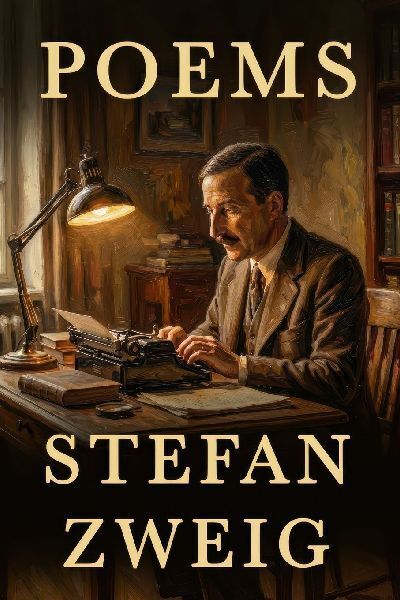
Before becoming the twentieth century's most celebrated biographer and novelist, Stefan Zweig was a poet of fin-de-siècle Vienna-the lost world he later immortalized in The World of Yesterday.These collected poems, written between 1901 and the First World War, capture the artist before fame and exile. They reveal the young Zweig immersed in turn-of-the-century aestheticism: translating French symbolists, haunting Viennese coffee houses, traveling from Venice to Bruges, wrestling with beauty and melancholy in equal measure.The dominant mood is Sehnsucht-untranslatable yearning, longing for what cannot be possessed. Zweig's speakers constantly seek: love that remains elusive, beauty that fades while being grasped, meaning in sensation and transience. Autumn dominates as season of decline, twilight as hour of threshold, solitude as condition of consciousness.From travel poems capturing Venice, Lake Como, and Brittany to meditative sequences on seasons and landscapes. From "The Night of Graces," sonnets circling obsessively around desire, to ballads, lyrics, and free verse experiments. From nature as mirror of psychological states to love as aesthetic contemplation to the self divided, examined, dissolved.These are poems of the last golden moment-written in ignorance that war would shatter European certainties, that Nazism would scatter Zweig's generation, that the beauty celebrated here existed already under sentence of death. Knowing what came after gives them haunting historical weight: they preserve a sensibility, a world, a way of being that catastrophe obliterated.Yet they're more than artifacts. The best poems achieve beauty transcending their period-capturing universal longing, consciousness in fragments, the search for meaning when meaning dissolves. Here is the aesthetic education that shaped Zweig's later prose, the romantic foundations beneath his psychological realism, the musical sensibility that would give his sentences their characteristic flow.Essential for admirers of Zweig's prose seeking his origins. For readers of Rilke, Hofmannsthal, and fin-de-siècle European poetry. For anyone interested in Vienna's golden age, symbolist aesthetics, or voices from before the catastrophe.
| Reihe | Independently published |
|---|---|
| ISBN | 9798243228862 |
| Sprache | Englisch |
| Erscheinungsdatum | 09.01.2026 |
| Größe | 229 x 152 mm |
| Verlag | Independently published |
| Übersetzung | Emma Ferousse |
| Lieferzeit | Lieferung in 7-14 Werktagen |
| Herstellerangaben | Anzeigen Libri GmbH Europaallee 1 | D-36244 Bad Hersfeld gpsr@libri.de |
Wie gefällt Ihnen unser Shop?