GUTSCHEIN
Bitte haben Sie einen Moment Geduld, wir legen Ihr Produkt in den Warenkorb.
Diese Produkte könnten Sie auch interessieren:
Bitte haben Sie einen Moment Geduld, wir legen Ihr Produkt in den Warenkorb.
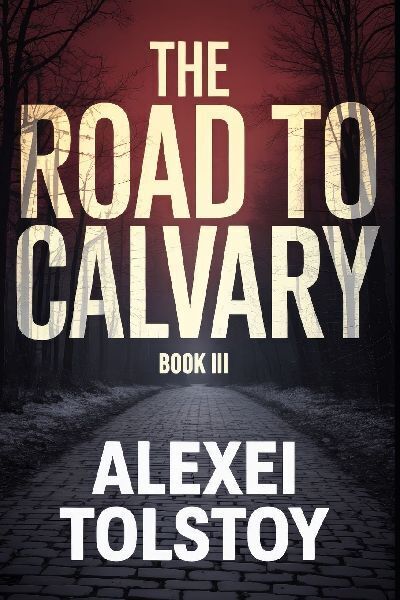
By 1920 the outcome of the Civil War is being determined. Denikin's White Army has reached its furthest advance and broken; the Red Army is consolidating across the vast geography of the former Russian Empire; and the question that The Eighteenth Year had rendered in its full uncertainty - who will govern Russia, what will survive, whether the ordeal has a destination - is becoming an answer. The answer is bleak. It is also, Tolstoy insists in the word he chose for the trilogy's title, morning.Roshchin has been fighting for the White cause - the cause that drew the imperial officer, the man formed by a tradition the revolution placed on the wrong side of history, with the loyalty of someone who cannot simply discard what his formation has made him. Across the years of the Civil War he has discovered what the White cause actually is and what it is becoming: not the restoration of what was worth restoring but the exhaustion of a world that no longer exists and cannot be reconstructed. His crossing to the Red side is the trilogy's central psychological event - not ideological conversion but the specific recognition of a man who has let the accumulated weight of historical experience reach its conclusion, who carries into his new commitment everything the old one has been, changed but not erased.Alexei Tolstoy completed The Bleak Morning in 1941, thirteen years after The Eighteenth Year, as Germany was crossing the Soviet border. The coincidence gave the novel's conclusion - the story of how Russia had survived the Civil War's ordeal - an urgency that no purely literary publication could have matched: a narrative of Russian survival, offered at the moment when Russian survival was again in question. The trilogy that had begun in émigré Paris in 1919, written by a man who had not yet determined his relationship to the Soviet state, ended in besieged Russia in 1941, completed by a man who had made his choice and lived within it for twenty years.The reunions that the novel delivers - Telegin and Dasha, Katya and Roshchin - are the reunions of people the ordeal has remade. The love is real. It is the love of people who have walked through the torments and know exactly what the walking cost.The title's word is precise: khmuroe - bleak, overcast, not triumphant. The morning arrives under clouds. It is morning nonetheless - and in 1941, as in 1920, that is not a small thing to say.The conclusion of one of the great Russian novels of the twentieth century - the ordeal arrived at, the cost counted, the dawn that was always the destination finally, bleakly, here.
Wie gefällt Ihnen unser Shop?