GUTSCHEIN
Bitte haben Sie einen Moment Geduld, wir legen Ihr Produkt in den Warenkorb.
Diese Produkte könnten Sie auch interessieren:
Bitte haben Sie einen Moment Geduld, wir legen Ihr Produkt in den Warenkorb.
| Reihe | Research in Education Fiscal Policy and Practice |
|---|---|
| Themen | Ratgeber Lebenshilfe, Persönlichkeitsentwicklung und praktische Tipps Bildungsberatung Studentenleben |
| ISBN | 9798887305622 |
| Sprache | Englisch |
| Erscheinungsdatum | 12.02.2024 |
| Größe | 234 x 156 mm |
| Verlag | Information Age Publishing |
| Herausgegeben von | Thomas Downes, Kieran M. Killeen |
| Lieferzeit | Lieferung in 7-14 Werktagen |
| Herstellerangaben | Anzeigen Libri GmbH Europaallee 1 | D-36244 Bad Hersfeld gpsr@libri.de |
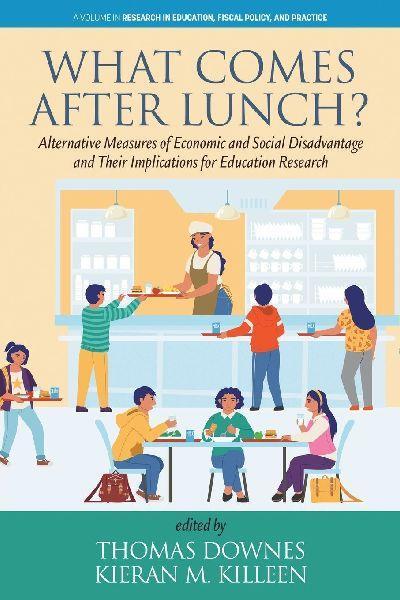
Faced with the problem of how to measure the magnitude of economic disadvantage in the populations served by schools or districts, researchers addressing school finance topics have invariably turned to the fraction of students eligible for free- or reduced-lunches (FRPL). But the facile dependence on FRPL may be problematic. A large and growing literature in learning sciences and in the field of education itself has pivoted towards studies that explore the relationship between social/emotional health and the learning of children. The growing body of research on social/emotional health and learning (e.g. Gershoff, Aber, Raver, and Lennon, 2007) suggests that more refined measures of wealth, income and hardship more fully account for the effects of economic disadvantage than does FRPL. Historically, research in school finance has not utilized these refined measures but instead has depended on FRPL.The Community Eligibility Provision (CEP), a recent change in how student eligibility for free lunch is determined, may have the unintended, and yet fortuitous, consequence that it will force school finance researchers to use more sophisticated measures of student hardship. The CEP makes it possible for schools serving low-income populations to classify all students as eligible for free- or reduced-price lunch. Koedel and Parsons (2021) argue that, while FRPL might have been a workable measure of student disadvantage prior to CEP, post-CEP the extent of a school's or a district's population that is disadvantaged is no longer measured accurately by FRPL. The CEP made accurate FRPL counts less critical for many schools and districts; post-pandemic legislation (Vock, 2023) in a number of states to make school meals free for all students in those states has increased the number of districts for which accurate counts are unimportant. Fazlul, Koedel, and Parsons (2023) go on to argue that, even prior to CEP, FRPL failed to provide an accurate measure of a school or district's poverty. This new policy environment makes it imperative to explore alternatives to FRPL and the implications for school finance.
| Reihe | Research in Education Fiscal Policy and Practice |
|---|---|
| Themen | Ratgeber Lebenshilfe, Persönlichkeitsentwicklung und praktische Tipps Bildungsberatung Studentenleben |
| ISBN | 9798887305622 |
| Sprache | Englisch |
| Erscheinungsdatum | 12.02.2024 |
| Größe | 234 x 156 mm |
| Verlag | Information Age Publishing |
| Herausgegeben von | Thomas Downes, Kieran M. Killeen |
| Lieferzeit | Lieferung in 7-14 Werktagen |
| Herstellerangaben | Anzeigen Libri GmbH Europaallee 1 | D-36244 Bad Hersfeld gpsr@libri.de |
Wie gefällt Ihnen unser Shop?